Free shipping sitewide!* View Details
Free shipping sitewide!* View Details

Toyota 4Runner vs. Ford Bronco: Which Is Better for Your Off-Road Adventures?
October 20, 2026
0
Ford Bronco
Toyota 4Runner
Off-Road Upgrades
Off-Road Performance
SUV Lift Kits
Toyota 4Runner vs. Ford Bronco: What Are the Biggest Differences?
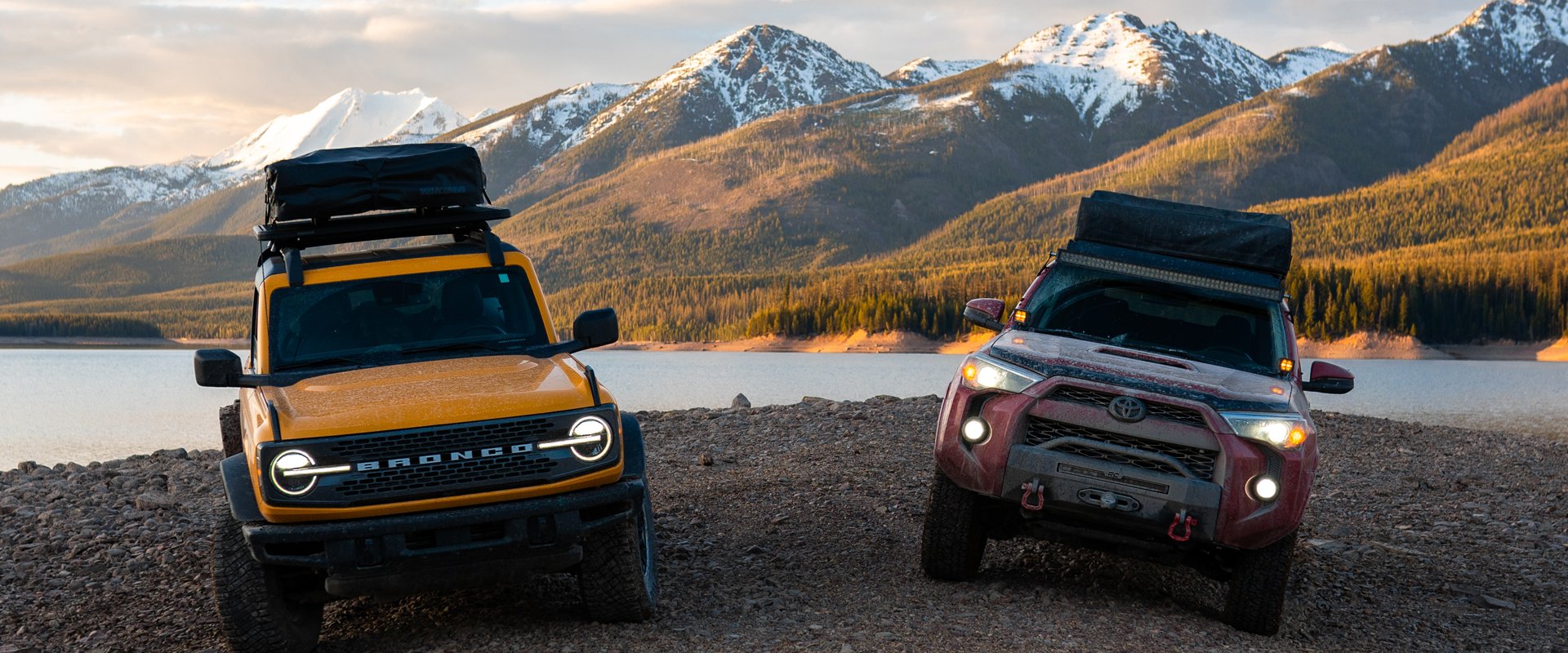
At first glance, the 4Runner and Bronco have quite a bit in common. Both ride on body-on-frame platforms, feature independent front suspension and solid rear axles, and offer equipment designed to take on challenging terrain.
The differences become more noticeable when you look at how each SUV is equipped and how you plan to use it.
Toyota 4Runner
The 4Runner has long been a favorite among off-road enthusiasts who want an SUV for both weekend adventures and everyday driving. The redesigned 2025 and newer models bring updated technology and additional off-road features.
Depending on the trim, you'll find:
- Part-time or full-time four-wheel drive
- Available rear locking differential
- Multi-Terrain Select and Crawl Control
- Available stabilizer disconnect for improved wheel movement
- Up to 10.1 inches of ground clearance
- Available i-FORCE MAX hybrid powertrain
The TRD Off-Road, TRD Pro, and Trailhunter trims are worth a closer look if you plan to spend plenty of time on the trails. The 4Runner also offers a fixed roof, generous enclosed cargo space, and available third-row seating on select models.
Ford Bronco
The Bronco takes a slightly different approach. Ford designed the current-generation Bronco with technical off-roading in mind, especially on models equipped with the available trail-focused packages.
Depending on the configuration, features include:
- Standard four-wheel drive with low-range gearing
- Available front and rear locking differentials
- Available electronic stabilizer bar disconnect
- G.O.A.T. Modes for different driving conditions
- Available 35-inch tires with the Sasquatch package
- Up to 13.1 inches of ground clearance on the Bronco Raptor
- Removable doors and roof panels
You also get a choice between two-door and four-door models. The two-door's shorter wheelbase is helpful on tight trails, while the four-door offers more room for passengers and gear.
One thing to keep in mind: trim level makes a big difference. A Bronco Badlands and a base Bronco won't handle the same obstacles equally, just as a 4Runner TRD Pro has advantages over an SR5.
Get the Latest from Rough Country
Sign up for our newsletter to receive product updates, exclusive deals, and off-road tips straight to your inbox.
Which Is Better for Sand and Dune Driving?
If you love heading out to the dunes, the Ford Bronco has a few advantages, particularly with the Sasquatch package or Raptor suspension. Still, don't count out the 4Runner. Both are capable of handling loose sand with the right tires and a little driving know-how.
How the Ford Bronco Handles Sand
The Bronco offers a Sand mode on select models, which adjusts how the vehicle responds to help maintain momentum on loose surfaces.
Sasquatch-equipped Broncos come with 35-inch tires, while the Raptor steps up to 37-inch tires and suspension designed for more demanding off-road driving.
Those larger tires help spread the vehicle's weight across soft sand when aired down appropriately. The Bronco's available powertrains also provide plenty of torque for tackling sandy climbs.
How the Toyota 4Runner Handles Sand
The 4Runner holds its own with available Multi-Terrain Select settings, including Sand mode, along with low-range gearing and an available rear locking differential.
Models equipped with the i-FORCE MAX hybrid powertrain also deliver strong low-speed torque, which is helpful when working through loose terrain.
For recreational sand driving and beach access roads, both SUVs are solid choices. If you're planning to tackle larger dunes and more demanding sandy terrain regularly, a properly equipped Bronco has the edge.
Either way, tire pressure and driving technique matter. Even the best-equipped SUV will struggle in deep sand with the wrong setup.
Which Is Better for Rock Crawling?
Rock crawling is where the Bronco starts to pull ahead, especially when equipped with front and rear locking differentials and a stabilizer bar disconnect.
When you're picking your way over large rocks, keeping your tires planted and maintaining traction is what matters most.
Why the Bronco Does Well on Rocks
The Bronco offers several features designed for rocky terrain, including:
- Available front and rear locking differentials to help maintain traction
- Available stabilizer bar disconnect for increased wheel movement
- Low-range gearing for slow, controlled climbing
- Protective skid plates on select trims
- Available 35-inch tires for additional ground clearance
The shorter wheelbase of the two-door Bronco is another plus. It helps reduce the chance of scraping the underside when crossing certain obstacles.
What About the 4Runner?
The 4Runner isn't afraid of a rocky trail, either.
TRD Off-Road, TRD Pro, and Trailhunter models include a locking rear differential, while Crawl Control helps manage throttle and braking at low speeds. Select trims also offer a stabilizer disconnect to help keep the tires in contact with uneven ground.
For moderate rock crawling and rough mountain trails, the 4Runner has plenty to offer. The Bronco's available front locker and specialized suspension equipment give it an advantage when obstacles become more demanding.
Which Is Better for Overlanding?
Planning to spend several days on the road and trails? The Toyota 4Runner is an appealing choice for overlanding, especially if you're carrying camping equipment, food, water, and everything else needed for a longer trip.
Cargo Space Makes a Difference
Packing for an overnight trip is one thing. Packing for several days away from civilization is another.
Here's how cargo space compares on select 2026 configurations:
|
Vehicle |
Cargo Space Behind Rear Seats |
|
Toyota 4Runner, two-row gas model |
48.4 cu. ft. |
|
Toyota 4Runner, two-row hybrid |
42.6 cu. ft. |
|
Ford Bronco, four-door hardtop |
35.6 cu. ft. |
|
Ford Bronco, four-door soft top |
38.3 cu. ft. |
|
Ford Bronco, two-door |
20.6 cu. ft. |
The two-row gas-powered 4Runner offers more space behind the rear seats than either Bronco configuration. That's helpful when you're loading coolers, recovery gear, sleeping bags, and other supplies.
What About Comfort on Longer Trips?
A good overlanding vehicle needs to handle the trails, but you also have to get to your destination.
The 4Runner's fixed roof and enclosed cabin offer a more traditional SUV experience during long highway drives.
The four-door Bronco is still a capable overlanding option, especially when your route includes more technical trails. Its removable roof adds to the outdoor experience, although road and wind noise tend to be more noticeable.
Both vehicles have aftermarket roof rack and cargo options to help organize equipment. Remember to account for payload and roof-load limits before piling on extra gear.
If most of your adventures involve long-distance travel and plenty of equipment, the 4Runner deserves a close look. If challenging trails are a bigger part of your plans, the Bronco makes a strong case.
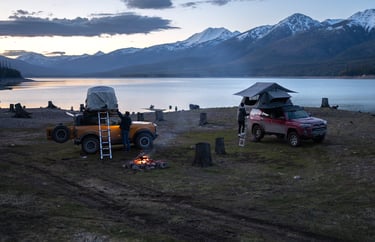
Which Is Better for Hunting and Outdoor Adventures?
For hunting trips, fishing weekends, and other outdoor activities, both SUVs have their advantages. The better choice often comes down to how much gear you're hauling and what the roads look like getting there.
Toyota 4Runner for Hunting
The 4Runner offers plenty of enclosed cargo space for hunting packs, boots, coolers, and other equipment.
Its fixed roof and rear hatch help protect everything from rain, dust, and changing weather. The power rear window is handy when you need to grab something from the back without opening the entire hatch.
If you're frequently loading and unloading gear or traveling with several people, the extra cargo room is a plus.
Ford Bronco for Hunting
The Bronco makes sense when getting to your hunting spot involves rough access roads, deep ruts, or rocky climbs.
The two-door model is easier to maneuver through certain tight wooded areas, although you'll sacrifice cargo space. The four-door gives you more room to work with.
For most gear-heavy hunting trips, the 4Runner is the more practical choice. But if your favorite hunting spots require navigating rough, narrow trails, the Bronco has plenty going for it.
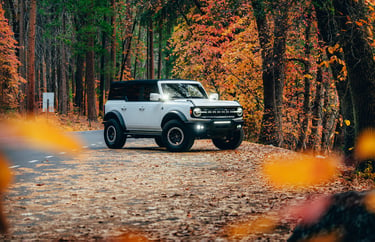
Which Is Better for Mud and Rough Trails?
Mud has a way of making even a familiar trail interesting. Deep ruts, slippery climbs, and changing ground conditions put your tires, traction systems, and ground clearance to the test.
Both the 4Runner and Bronco handle muddy conditions well when properly equipped.
The 4Runner offers Multi-Terrain Select on applicable trims, along with an available rear locker to help maintain traction.
The Bronco offers Mud/Ruts mode on select configurations, with available front and rear lockers and larger factory tire packages for more demanding conditions.
Don't Overlook Your Tires
The tires on either SUV often make a bigger difference than the badge on the grille.
Mud-terrain tires have more aggressive tread patterns designed to shed mud and maintain traction. Taller tires also help with clearance when trails become deeply rutted.
For typical muddy backroads, either SUV will get the job done with the right equipment. If you're regularly tackling deep mud and heavily rutted trails, the Bronco's available traction and clearance options give it an advantage.
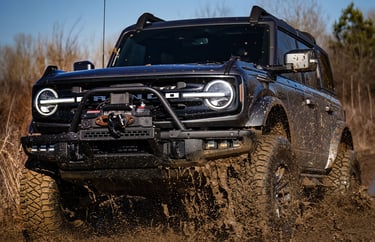
Toyota 4Runner or Ford Bronco: Which Should You Choose?
If your weekends involve technical rock crawling, deep mud, large dunes, or tight trails, the Ford Bronco deserves a serious look. Its available lockers, specialized tire packages, and trail-focused equipment offer advantages when conditions get challenging.
If you spend your weekends camping, hunting, traveling, or exploring backroads, the Toyota 4Runner makes a strong case. You get plenty of off-road capability without giving up the cargo space and comfort needed for everyday driving.
Of course, trim level and equipment make a difference. A well-equipped 4Runner will outperform a poorly equipped Bronco in some conditions, and the reverse is equally true.
The best SUV is the one suited to the places you want to go and the gear you need to bring.
Whichever one ends up in your driveway, Rough Country offers upgrades to help get your build ready for the next trail.