Free shipping sitewide!* View Details
Free shipping sitewide!* View Details

How to Fix Rubbing After Installing Larger Tires
February 11, 2026
0
Fender Flares
All-Terrain Tires
Mud-Terrain Tires
Off-Road Tires
Nitto Ridge Grappler Tires
Venom Tires
Why Bigger Tires Start Rubbing
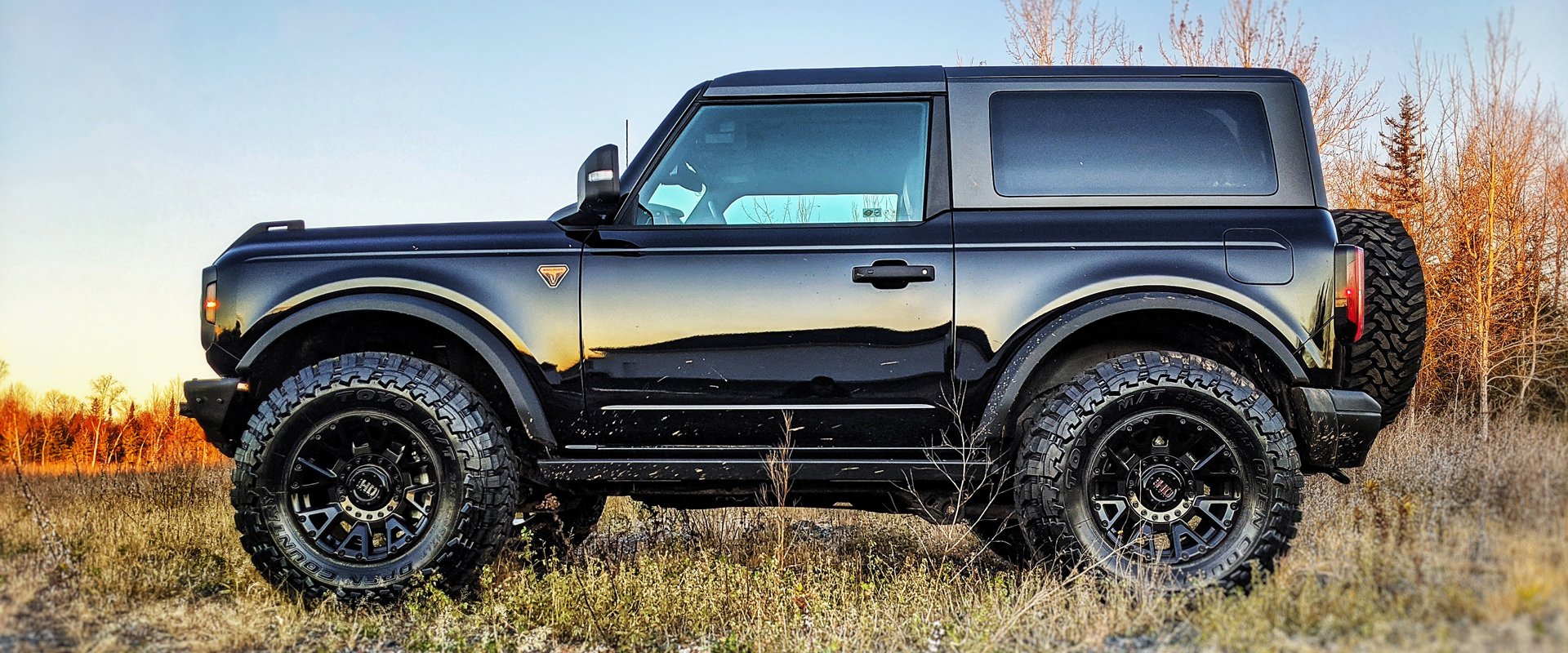
When you upgrade tire size, you change more than the look. You change how your suspension moves, how your wheels sit, and how much clearance you have inside the wheel well.
Most rubbing issues come from one of these:
- Not enough lift height
- Incorrect wheel offset or backspacing
- Factory suspension limits
- Tight wheel wells from the factory
- Tires contacting control arms or sway bars
When you turn or compress the suspension, the tire needs room to move. If there’s not enough space, it hits plastic, metal, or suspension components.
It doesn’t mean you did anything wrong. It just means the setup needs adjustment.
Make Sure Your Lift Kit Matches Your Tire Size
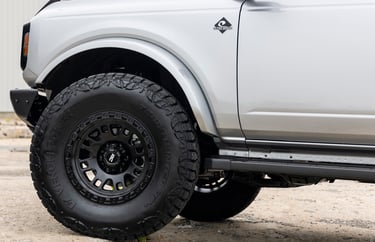
If you jumped to 33-inch or 35-inch tires, stock suspension is often the first problem.
A properly engineered suspension lift kit creates the clearance needed for larger tires to move through their full range without rubbing. Lift height matters, but so does geometry.
Look at:
- Exact lift height
- Shock travel
- Control arm angles
- Bump stop placement
A quality lift system corrects angles and maintains ride quality while giving you real wheel clearance. If you’re running bigger tires without enough lift, rubbing during turns or suspension compression is expected.
Before changing anything, confirm your tire size matches the recommended lift height for your truck or Jeep.
Check Your Wheel Offset and Backspacing
This one catches a lot of people off guard.
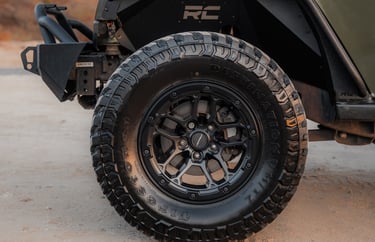
Wheel offset determines how far your tire sits inside or outside the wheel well. If your wheel offset is too positive, the tire sits too far inward and can rub control arms or the frame when turning.
Here’s the simple breakdown:
- More positive offset pulls the wheel inward
- More negative offset pushes it outward
- Proper backspacing creates clearance
If your larger tires rub at full lock, especially on the inside, your wheels are likely sitting too far in.
Switching to the correct offset often fixes rubbing without touching the suspension. It also widens your stance and improves stability.
Trim Where Necessary
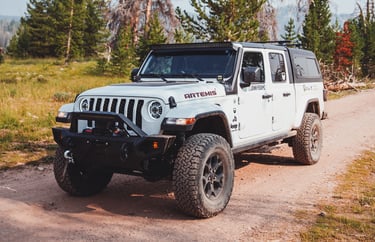
Sometimes the solution is straightforward. Factory fender flares and bumper corners are not designed for aggressive off-road tires.
Common contact points include:
- Plastic fender liners
- Front bumper corners
- Pinch welds
- Inner wheel wells
Careful trimming can eliminate rubbing during tight turns. Use clean cuts, seal exposed metal, and test clearance afterward.
This isn’t a hack fix. It’s a normal part of fitting larger tires on many trucks and Jeeps.
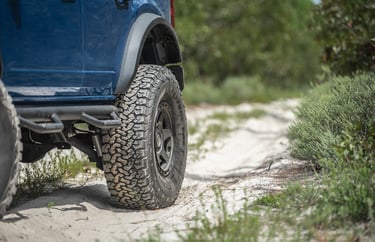
Add a Leveling Kit or More Lift
If rubbing happens when hitting bumps or flexing off-road, your suspension likely needs more room to cycle.
A leveling kit helps if your truck has factory rake. Raising the front slightly often clears 33-inch tires that barely rub.
For larger setups, a full lift kit provides:
- Increased ground clearance
- Corrected suspension geometry
- Improved articulation
- Better overall tire clearance
Bigger tires need suspension travel. If your suspension compresses and the tire has nowhere to go, it will make contact.
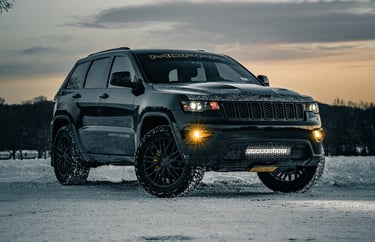
Get a Proper Alignment
After installing larger tires or a lift kit, alignment is not optional.
Poor alignment increases tire wear and can exaggerate rubbing issues. Adjusting steering stops can also limit over-rotation that causes contact at full lock.
A simple alignment protects your tires and keeps your suspension system working the way it should.
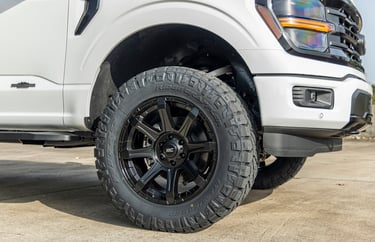
Last Bit of Advice
From daily drivers to trail rigs, here’s what works:
- Plan tire size, lift height, and wheel offset together
- Confirm fitment before ordering
- Check clearance at full lock
- Test suspension compression if possible
- Don’t ignore small rubbing early on
In the world of aftermarket truck parts, every change affects something else. Treat your build as a system, not separate upgrades.
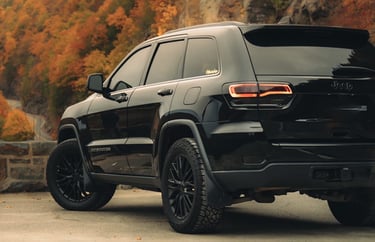
Tire rubbing after installing larger tires is common. It usually comes down to clearance, geometry, or offset.
Dial those in, and the problem goes away.
If you’re working through a rubbing issue on your truck or Jeep, drop a comment below with your tire size, lift height, and wheel specs.