Early Black Friday Deals + Free Shipping* · Shop Now
Early Black Friday Deals + Free Shipping* · Shop Now

Do You Need Air Springs on a Lifted Truck?
November 24, 2026
0
lift kit
Air Spring Kits
towing upgrade
towing upgrades
air springs
Do Lifted Trucks Really Need Air Springs?
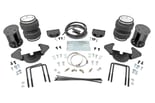
Air springs, also called air bags or helper springs, work with your existing rear suspension to provide extra support when you're carrying weight. You adjust the air pressure depending on the load, helping keep the rear end from dropping too much.
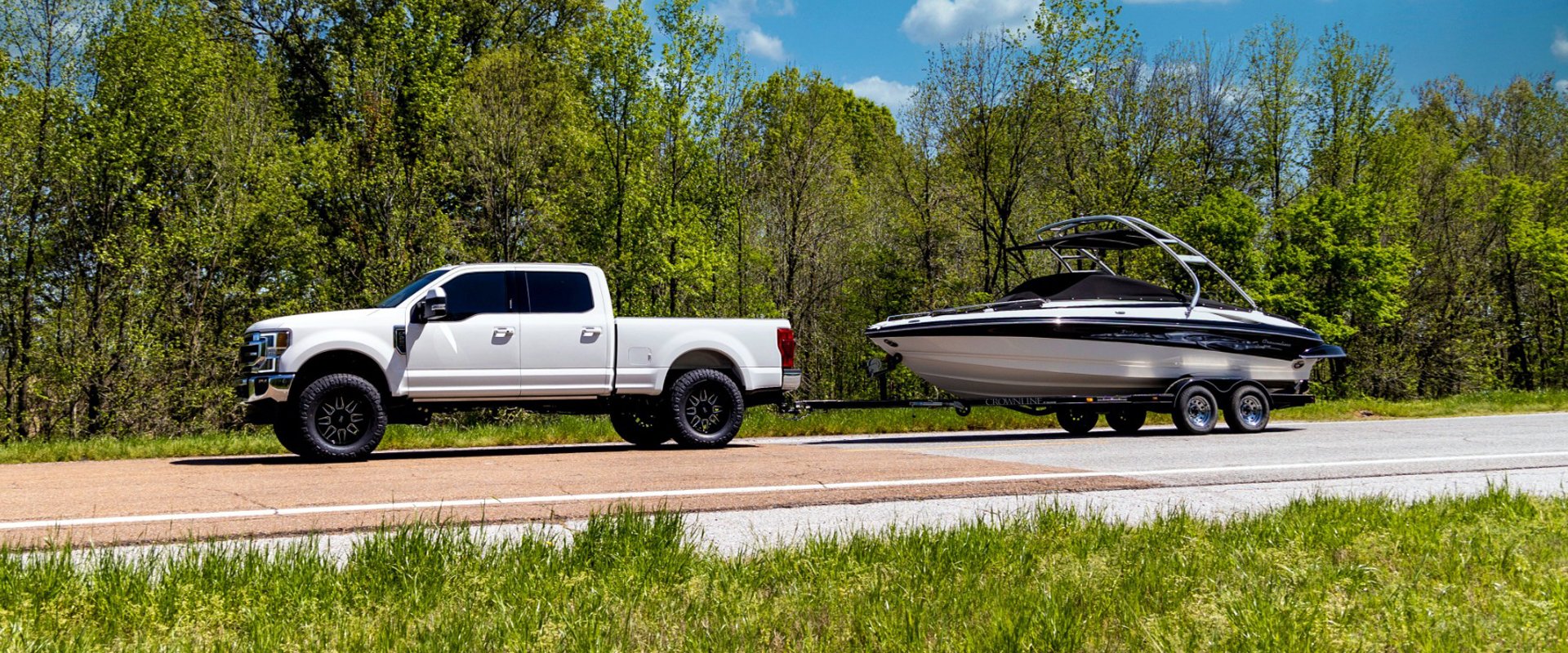
They're especially useful if you tow a camper, haul equipment, or regularly load down your truck bed.
The important thing to remember is that air springs provide additional support. They don't replace your lift kit or increase how much weight your truck is rated to carry.
Why Does a Lifted Truck Still Squat When Towing?
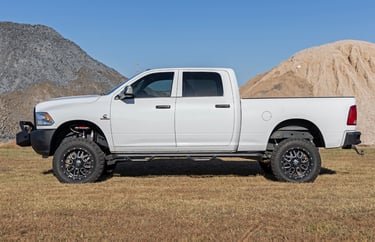
Even with a suspension lift, your truck's rear springs still compress when you add weight.
Hook up a heavy trailer, and the tongue weight pushes down on the rear suspension. Load the bed with tools or equipment, and you'll see a similar effect.
A little squat is normal. Too much, though, affects how your truck sits and handles. The front end might rise, your headlights might point higher than usual, and the truck might feel less controlled over bumps.
Air springs help support the rear suspension and bring the truck closer to its normal ride height when loaded.
Will Air Springs Work with Your Lift Kit?
In many cases, yes. The trick is finding a kit that works with your truck's suspension.
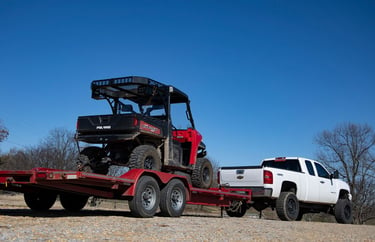
When you lift a truck, the distance between the frame and rear axle often changes. Air springs need to fit within that space while allowing the suspension to move properly.
A kit designed for a factory-height truck might not fit correctly once you've added a lift. Depending on your setup, you might need different mounting brackets, longer air springs, or spacers.
Before buying a kit, check a few things:
- Your truck's year, make, and model
- The type and height of your suspension lift
- How much lift you have in the rear
- Whether the air spring kit fits your suspension
- Whether spacers or additional brackets are needed
Don't assume every air spring kit works with every lift. Checking compatibility before ordering saves you from dealing with the wrong parts during installation.
Do You Need Air Spring Spacers on a Lifted Truck?
You might, depending on how much rear lift your truck has.
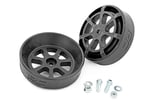
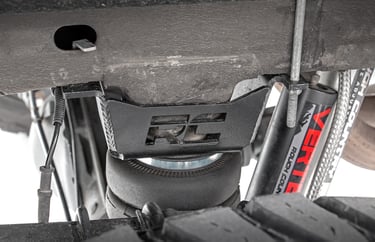
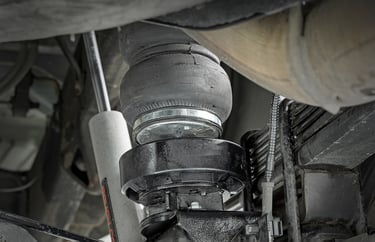
Air spring spacers help make up for the extra distance between the frame and axle on certain lifted trucks. They position the air springs where they're supposed to sit, allowing them to work properly.
Here's where some truck owners get tripped up. The advertised lift height isn't always the same as the amount of lift in the rear.
For example, a 6-inch lift kit might raise the front 6 inches but the rear only 4 inches. If you order spacers based on the full 6 inches, you might end up with the wrong size.
Instead, check your actual rear lift height and follow the air spring manufacturer's fitment instructions.
Rough Country offers Air Spring Spacers for compatible lifted applications.
What About Suspension Travel?
If you take your lifted truck off-road, this is something worth paying attention to.
Your rear suspension moves up and down as you drive over bumps, dips, and uneven ground. Air springs need enough room to handle that movement.
Some traditional air spring setups limit how far the rear axle drops because the air bags stay connected at both ends. That's not ideal if you need the extra suspension travel on the trail.
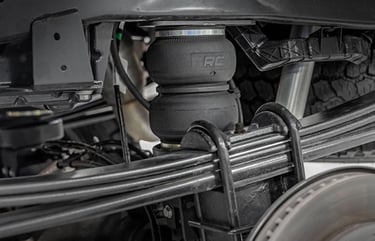
An air spring cradle offers another option. It supports the bottom of the air bag while allowing the axle to move away as the suspension extends.
Rough Country's Air Spring Cradle Kit is designed for compatible setups where maintaining suspension travel matters.
You'll still need to check fitment and follow the installation requirements for your particular suspension.
Will Air Springs Make Your Lifted Truck Ride Better?
They help most when you're carrying a load.
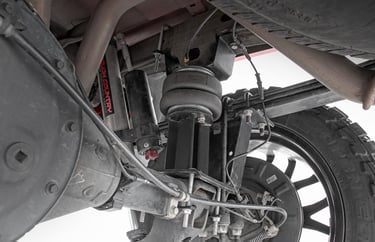
If your rear suspension sags or bottoms out with a trailer attached, properly adjusted air springs help keep the truck more level and controlled.
When you're driving empty, though, too much air pressure makes the rear suspension feel stiff or bouncy. That's why being able to adjust the pressure is such a big advantage.
Add air when you're hauling or towing, then lower the pressure to the manufacturer's recommended minimum when the truck is unloaded.
Air springs also work alongside your shocks. While air springs provide load support, shocks control suspension movement. Both play a part in how your truck rides and handles.
Manual-Fill or Onboard Air: Which Is Better?
Once you've picked an air spring kit, you'll need a way to adjust the pressure. There are two common choices.
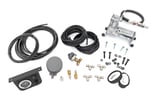
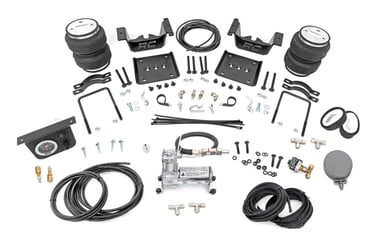
Manual-fill systems use inflation valves, usually mounted near the rear bumper. You add air with an external compressor, similar to filling a tire. They're a good fit if you only tow or haul occasionally.
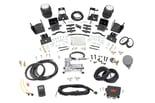
Onboard air systems use an installed compressor, allowing you to adjust pressure with compatible controls. They're more convenient if your load changes frequently or you tow on a regular basis.
Neither option is automatically better. It comes down to how often you need to make adjustments.
When Are Air Springs Worth Adding?
Think about how you use your truck.
If you installed a lift mainly for appearance and larger tires, and your truck rarely carries heavy loads, air springs might not be worth the extra expense.
But if you regularly tow or haul, they're worth a closer look.
Air springs make sense when you:
- Tow a camper, boat, or equipment trailer
- Haul ATVs, motorcycles, or heavy gear
- Carry tools and equipment in your truck bed
- Notice excessive rear-end sag when loaded
- Frequently switch between towing and everyday driving
Keep in mind, air springs won't increase your truck's factory payload rating, Gross Vehicle Weight Rating (GVWR), Gross Axle Weight Rating (GAWR), or towing capacity. Even if your truck sits level with a heavy load, you still need to stay within the manufacturer's weight limits.
FAQs
Do air springs lift your truck higher?
Air springs help restore ride height when your truck is loaded, but they're not a replacement for a suspension lift. Their main job is supporting the rear suspension under weight.
How do I know what size air spring spacers I need?
Start with your actual rear suspension lift height, not the advertised overall lift height. Then check the manufacturer's spacer sizing instructions for your air spring kit.
Will air springs limit my suspension travel?
Some setups do, especially when the air springs aren't designed for the available suspension movement. A compatible cradle system helps address this issue on certain lifted trucks.
Do air springs increase towing capacity?
No. Air springs help reduce squat and provide extra suspension support, but your truck's factory towing and payload limits stay the same.