Free shipping sitewide!* View Details
Free shipping sitewide!* View Details

Do You Need an Alignment After a Lift Kit or Leveling Kit?
October 2, 2026
0
lift kit
leveling kit
Suspension Lift Kit
Upper Control Arms
wheel and tires
2-Inch Lift Kit
6-Inch Lift Kit
offroad tire
Why Does a Lift or Leveling Kit Change Alignment?
Your suspension was built around the truck’s factory ride height.
Raise the front or the whole truck and parts such as the control arms, tie rods, ball joints, and steering linkage now sit at different angles.
On many independent front suspension trucks, even a leveling kit changes the position of the upper and lower control arms. A taller lift changes those angles even more.
A 2-inch strut spacer on one truck will not affect the front end the same way a 4-inch suspension lift does on another. Some larger kits include crossmembers, knuckles, control arms, or other parts designed to help correct those changes.
What matters most is the vehicle, the type of suspension, the amount of lift, and what the kit includes.
Get the Latest from Rough Country
Sign up for our newsletter to receive product updates, exclusive deals, and off-road tips straight to your inbox.
What Do Camber, Caster, and Toe Mean?
These are the three alignment terms you’ll hear most often after lifting or leveling a truck.
Camber
Look at the truck from the front.
Camber describes whether the tops of the tires lean inward or outward. If the angle is too far off, one side of the tread can wear faster than the other.
If you start seeing more wear along the inside or outside edge of the tire, camber is one thing worth checking.
Caster
Caster has more to do with how the truck feels going down the road.
It helps the vehicle track straight and helps the steering wheel return toward center after a turn. If caster is out of range, the truck may wander or feel less planted at highway speeds.
Toe
Toe describes whether the fronts of the tires point slightly inward or outward when viewed from above.
When toe is off, the tires scrub across the pavement instead of rolling straight. That can wear through a set of tires faster than many people expect.
Feathered tread, where the tread blocks feel smooth one way and sharp the other, often points to a toe issue.
Do You Need an Alignment After a Leveling Kit?
Yes. A leveling kit still changes the position of the front suspension, even if the height change is smaller than a full suspension lift.
For most setups, get the alignment checked once the kit is installed.
On an independent front suspension truck, raising the front changes the working angle of the control arms and steering linkage. That can affect caster, camber, toe, or more than one at the same time.
Some Rough Country leveling kits are designed to retain factory alignment specs. Others may need more adjustment once the front end is raised.
Depending on the application, the shop may use the factory adjustment points, cam bolts, or other hardware to get everything back into spec.
Always follow the instructions for your specific truck and kit.
How Soon Should You Get an Alignment After a Lift?
Get it done as soon as the lift or leveling kit is installed.
You do not want to drive for weeks waiting to see if the tires start wearing funny. By the time you notice uneven wear, you have already lost tread.
If new wheels and tires are part of the build, get those installed before the final alignment unless the kit instructions say otherwise.
For taller lifts, it also helps to use a shop familiar with lifted trucks and SUVs. They are more likely to understand the extra adjustment some setups need.
What Happens If You Skip the Alignment?
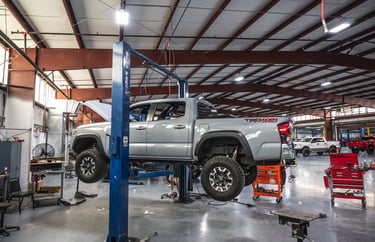
You may end up chasing steering problems or wearing out a new set of tires sooner than expected.
Common signs include:
- Uneven tire wear
- Pulling left or right
- Wandering on the highway
- An off-center steering wheel
- Constant steering correction
- Poor straight-line tracking
A truck does not have to feel terrible for the alignment to be off.
Small toe or camber changes may not feel dramatic from the driver’s seat, but the tires can still show the problem after a few thousand miles.
Fixing the alignment stops the cause of the wear. It does not put tread back on the tire.
What Are the Signs Your Alignment Is Off After a Lift?
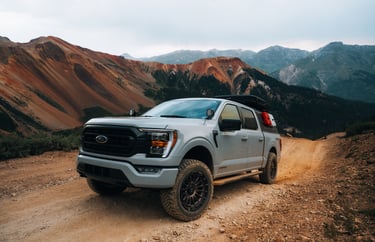
The first clues usually show up in the steering or the tires.
Uneven Tire Wear
Take a look at the inside and outside edges of the front tires.
If one side is wearing faster, the alignment needs attention. Feathering or cupping can also point to alignment, suspension, tire balance, or worn parts.
Do not wait until the wear gets severe. Catching the issue early gives you a better chance of saving the tires.
Steering Pull
If you have to keep slight pressure on the wheel to hold the truck straight, get the alignment checked.
Check tire pressure first. A low tire on one side can also make the vehicle pull.
Wandering
If you are making constant little corrections on a straight road, something is off.
Alignment is one possibility. Worn tie rods, ball joints, control arm bushings, wheel bearings, or other steering and suspension parts can create the same feeling.
Off-Center Steering Wheel
If the truck drives straight but the steering wheel sits left or right of center, the alignment deserves a look.
A straight steering wheel is a good sign, but it does not tell the whole story. Camber, caster, and toe still need to fall within the proper range.
Will a Lift Kit Cause Uneven Tire Wear?
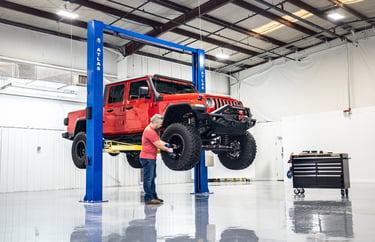
Lifting your truck does not automatically mean your tires will wear unevenly.
Problems usually start when the alignment falls outside the proper range or when the vehicle no longer has enough factory adjustment to bring everything back where it needs to be.
Lift height matters here.
Some mild lifts still align using the factory adjustment points. Taller setups may need extra parts to get caster or camber back into range.
Depending on the vehicle, that may mean upper control arms, cam bolts, brackets, crossmembers, or other correction parts.
What you need comes down to the truck, how high you lifted it, and what the kit already includes.
Why Do Larger Tires Make Alignment Problems More Noticeable?
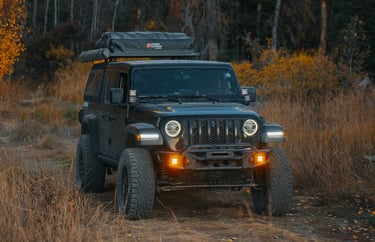
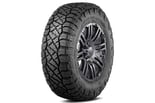
Larger aftermarket tires are often wider and heavier than stock, so alignment problems can become easier to notice.
If toe or camber is off, you may see uneven wear sooner. Aggressive all-terrain or mud-terrain tread can also make feathering or abnormal road noise more obvious.
There is also the cost factor.
A new set of oversized tires is not cheap. Letting the inside or outside edge wear away because the alignment was skipped gets expensive fast.
Tire fitment also depends on more than lift height. Wheel width, offset, backspacing, tire dimensions, and the specific vehicle all affect clearance.
Follow the wheel and tire recommendations for your kit, and keep in mind that tire dimensions vary by manufacturer even when the size printed on the sidewall is the same.
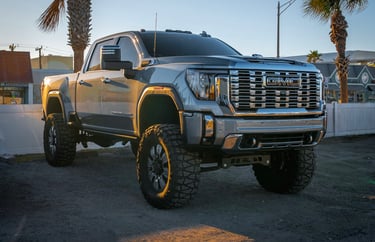
Do You Need Different Alignment Parts After a Lift?
Sometimes.
Many mild lift and leveling kits still align with the factory adjustment points.
Other setups need more adjustment than the factory hardware offers, especially once lift height increases.
Depending on the vehicle, the fix may include:
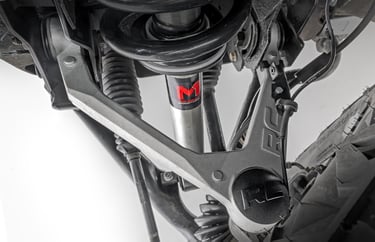
- Upper control arms
- Cam bolts
- Caster or camber correction hardware
- Control arm brackets
- Track bar components
- Other suspension correction parts
Do not assume every lifted truck needs extra parts.
If the alignment shop cannot bring the numbers into spec, that is when you start looking at what extra adjustment the vehicle needs.
Make the Alignment Part of the Install
When you plan a lift or leveling kit install, plan the alignment too.
Once the suspension work is finished:
- Make sure all suspension and steering hardware is properly torqued.
- Install the wheels and tires you plan to run.
- Get a professional alignment.
- Ask for the before-and-after printout.
- Keep an eye on tire wear and steering feel during the first several hundred miles.
If you are running a taller lift, use a shop familiar with lifted trucks, Jeeps, and SUVs.
Get the alignment handled right away and you will save yourself from chasing steering issues or wearing out a new set of tires.
FAQs
Do I need an alignment after a leveling kit?
Yes. A leveling kit changes the position of the front suspension, so the alignment should be checked after installation. Some kits are designed to stay within factory specs, so follow the instructions for your exact Rough Country kit.
How soon should I get an alignment after a lift?
Get the alignment as soon as the lift is installed. Driving too long with incorrect toe, camber, or caster can lead to uneven tire wear and steering problems.
What happens if I skip the alignment after a lift kit?
You may see uneven tire wear, pulling, wandering, an off-center steering wheel, or poor straight-line tracking. Even small alignment changes can wear tires over time.
Will a lift kit cause uneven tire wear?
Not by itself. Uneven wear usually starts when the alignment falls outside the proper range or when the suspension does not have enough adjustment to bring the vehicle back into spec.
Does a 2-inch lift need an alignment?
Yes. Even a 2-inch lift or leveling kit changes where the suspension sits, so it is worth getting the alignment checked. The amount of adjustment depends on the vehicle and kit.
![Ford 5in Suspension Lift Kit [476.20]](https://media.prod.roughcountry.com/cdn-cgi/image/width=155,format=webp,fit=cover/media/catalog/product/9/7/97-03-f150-4-5_-n3-lift-_477n2__1.jpg)