Early Black Friday Deals + Free Shipping* · Shop Now
Early Black Friday Deals + Free Shipping* · Shop Now

How to Improve Winter Traction by Adding Weight to Your Truck Bed
November 19, 2026
0
truck bed weight
winter truck traction
truck traction in snow
snow driving tips
winter truck preparation
Does Adding Weight to a Truck Bed Help in Snow?
Yes, especially if you drive a rear-wheel-drive truck. Pickups tend to carry more weight toward the front, leaving the rear end relatively light when the bed is empty. On snowy roads, this means less downward pressure on the rear tires, making them more likely to spin when accelerating.
Adding weight over the rear axle increases the load on those tires, helping them get a better grip when pulling away from a stop or climbing a snowy hill.
But there's a catch. More weight doesn't always mean better traction. Too much adds unnecessary strain to your truck and affects how the vehicle handles and stops.
How Much Weight Should You Put in Your Truck Bed for Snow?
There's no magic number for every pickup. A half-ton truck has different needs than a heavy-duty 2500 or 3500, and a 2WD truck behaves differently from one equipped with 4WD.
For some rear-wheel-drive pickups, 100 to 200 pounds of secured ballast is a reasonable amount to consider as a starting point, provided the manufacturer permits added ballast and the truck has sufficient load capacity. That's roughly two to four 50-pound sandbags. This isn't a universal recommendation, and heavier trucks don't automatically need more weight.
Here's what makes the difference:
· 2WD trucks: Rear-wheel-drive pickups tend to benefit the most because the rear tires handle all the driving power.
· 4WD trucks: With power going to both axles when 4WD is engaged, extra weight often offers less benefit. Many 4WD trucks perform well without added ballast.
· Heavy-duty trucks: A larger truck doesn't automatically need a heavier load. Consider the truck's weight distribution, existing cargo, and manufacturer recommendations.
· Loaded truck beds: If you regularly carry tools, equipment, or other gear, you might already have enough weight over the rear axle.
The goal isn't to load your bed until the rear end feels heavier. It's to improve traction without creating new handling problems.
Where Should You Put Weight in Your Truck Bed?
Placement matters. For general winter traction, keep the weight low, centered over or near the rear axle, and evenly distributed from side to side.
Avoid stacking everything against the tailgate. Putting too much weight behind the rear axle changes the truck's weight distribution and reduces some of the load on the front tires, affecting steering and handling.
You'll also want to secure every bag or container. Loose weight sliding across the bed during a sudden stop or sharp turn is a serious safety concern.
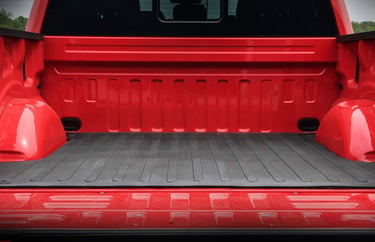
A Rough Country Bed Mat helps protect the bed floor while providing a non-slip surface to reduce cargo movement. You'll still need proper tie-downs or restraints to keep heavy ballast securely in place.
If your truck has a tonneau cover or bed storage system, leave enough room for the cover to operate and keep the ballast clear of moving parts. Remember, the weight of those accessories counts toward your truck's payload, too.
One exception is trucks equipped with snowplows. These setups often require ballast farther behind the rear axle to offset the plow's weight. Always follow the plow and vehicle manufacturer's instructions.
What Should You Use for Truck Bed Weight?
You don't need anything fancy. A few common options work well, depending on how much weight you need and how you use your bed.
- Sandbags: Affordable, easy to find, and simple to remove when winter ends. Check for tears and moisture damage throughout the season.
- Tube sand: Long, narrow bags designed for traction ballast. Their shape makes them convenient to position around the wheel wells.
- Purpose-built ballast containers: Designed for truck beds, these provide a more organized option for drivers who regularly add winter weight.
Avoid loose concrete blocks, unsecured metal weights, or anything with hard edges likely to damage your bed or become dangerous during a collision. Whatever you choose, secure the load with appropriately rated tie-downs.

Does a Lifted Truck Need More Weight for Winter Traction?
Not necessarily. Adding a suspension lift changes your truck's ride height and center of gravity, which affects handling, particularly on slippery roads.
A lifted truck doesn't automatically need more ballast than a stock truck. In fact, adding excessive weight or placing the load too far behind the axle makes an already taller vehicle harder to manage during sudden maneuvers.
Larger tires also deserve attention. Tire size alone doesn't determine winter traction. Tread design, rubber compound, inflation pressure, and the type of snow you're driving through all play a role.
If you drive a lifted truck, start by checking your tires, suspension condition, and alignment before deciding whether extra bed weight makes sense. A properly installed suspension lift and appropriate tires matter far more than piling sandbags into the bed.
Don't Forget Your Truck's Payload Limits
Before tossing a few hundred pounds into the bed, check your truck's weight ratings.
Your payload capacity includes passengers, cargo, aftermarket accessories, and any ballast you add. You'll find the vehicle's weight information on the driver's door-jamb labels and in the owner's manual.
Pay attention to three important limits:
- Payload capacity: How much additional weight your truck is rated to carry.
- Gross Vehicle Weight Rating (GVWR): The maximum allowable weight of your fully loaded truck.
- Gross Axle Weight Ratings (GAWR): The maximum allowable load for each axle.
If you're towing, remember trailer tongue weight also uses part of your available payload. Adding winter ballast on top of towing equipment and cargo might push your truck beyond its limits.
For trucks frequently carrying heavy loads, Rough Country Air Springs help support the rear suspension and reduce sag. They don't increase your truck's factory payload or weight ratings, though, so staying within those limits is still essential.
Winter Truck Bed Weight Checklist
Before adding weight, take a few minutes to make sure you're doing things safely.
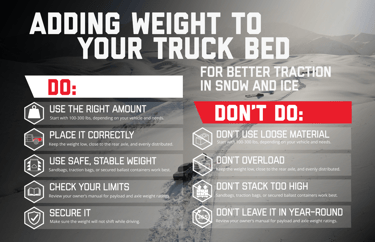
· Check your owner's manual for ballast recommendations.
· Verify your available payload and axle weight limits.
· Account for existing cargo, accessories, and trailer tongue weight.
· Place weight low, near the rear axle, and evenly across the bed.
· Secure sandbags or ballast containers to prevent shifting.
· Check tire tread, pressure, and winter suitability.
· Remove unnecessary ballast when hauling or towing.
So, Is Adding Weight to Your Truck Bed Worth It?
If you drive a rear-wheel-drive truck with an empty bed, adding a modest amount of secured weight might help you get better traction in the snow. If you have a 4WD truck with good tires, you might not notice much difference.
The important thing is knowing what your truck needs. More weight isn't always the answer, especially when worn tires, improper tire pressure, or poor road conditions are the bigger problem.
Before winter hits, check your tires, know your truck's weight limits, and make sure any cargo in your bed stays securely in place. A little preparation makes those first snowy drives a lot less stressful.