Early Black Friday Deals + Free Shipping* · Shop Now
Early Black Friday Deals + Free Shipping* · Shop Now

GMC Shocks & Struts
Shop By Vehicle
The Make is not valid for your current vehicle.
The Model is not valid for your current vehicle.
The Year is not valid for your current vehicle.
Shocks & Struts


Loaded Strut Pair
773 reviews
Loaded Strut Pair
73 reviews

Loaded Strut Pair
73 reviews
Vertex 2.5 Remote Reservoir Leveling Coilovers
45 reviews

Loaded Strut Pair
773 reviews

Vertex 2.5 Reservoir Rear Shocks
164 reviews

N3 Leveling Struts
3830 reviews
Loaded Strut Pair
773 reviews

N3 Leveling Struts
3830 reviews
V2 Front Shocks
78 reviews

V2 Front Shocks
V2 Front Shocks
78 reviews
V2 Rear Shocks

V2 Rear Shocks
132 reviews
V2 Rear Shocks
132 reviews
V2 Rear Shocks
40 reviews
V2 Rear Shocks
40 reviews
V2 Rear Shocks
132 reviews
V2 Rear Shocks
132 reviews

V2 Rear Shocks
132 reviews
V2 Rear Shocks
132 reviews
V2 Front Shocks
22 reviews

V2 Rear Shocks
132 reviews
V2 Rear Shocks
132 reviews

V2 Rear Shocks
40 reviews
V2 Rear Shocks
V2 Rear Shocks
40 reviews
V2 Rear Shocks
40 reviews
V2 Rear Shocks
40 reviews
V2 Rear Shocks
40 reviews
V2 Front Shocks
78 reviews
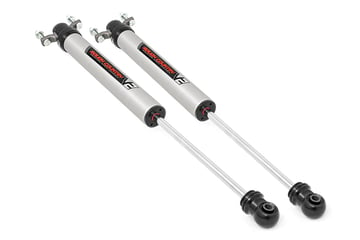
V2 Front Shocks
78 reviews

V2 Front Shocks
78 reviews

N3 Front Shocks
469 reviews

N3 Leveling Struts
3830 reviews
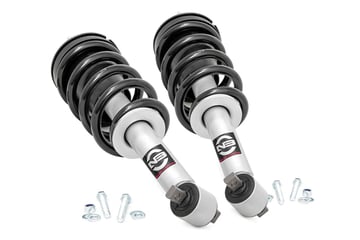
N3 Rear Shocks
1168 reviews

Shocks & Struts FAQ
What is the difference between a shock and a strut?
Shocks and struts both absorb impact and stabilize your vehicle, but they serve different roles. Shocks are standalone dampers, while struts combine a shock absorber with structural components like a coil spring and mount. Most trucks use shocks in the rear and struts in the front to balance support and control.
How do I know if my struts or shocks are bad?
You can tell your shocks or struts are worn when your ride feels bouncy, unstable, or bottoms out over bumps. Uneven tire wear, fluid leaks, and longer stopping distances are also warning signs. Replacing damaged shocks and struts early keeps your suspension performing properly and protects other components from premature wear.
Can I replace shocks but not struts?
Yes, you can replace shocks independently if your struts are still in good condition. Since shocks and struts wear at different rates, it’s best to inspect both before replacing one or the other. Rough Country offers direct-fit replacements for both shocks and struts to ensure balanced performance.
What causes struts to go bad?
Struts wear out from constant road impact, rough terrain, and exposure to dirt or road salt. Off-road driving and heavy loads accelerate the breakdown of seals and internal components. Regular inspection and proper maintenance help extend their life, especially in rugged driving conditions.
What is the life expectancy of a strut?
The average lifespan of a strut is about 50,000 to 80,000 miles, depending on driving habits and terrain. Off-road or heavy-duty use can shorten that lifespan. Choosing high-quality Rough Country struts ensures long-lasting performance and dependable ride quality.
