Free shipping sitewide!* View Details
Free shipping sitewide!* View Details

Lift Kit vs. Leveling Kit: Which Is Right for Your Truck?
September 25, 2026
0
lift kit
leveling kit
Leveling kits
lifted Ford F-150
lifted truck
lift kit install
Comparison
Here’s how the two compare.
|
Main goal |
Reduce factory rake |
Add overall height and clearance |
|
Typical height |
Around 1 to 2.5 inches on many trucks |
Around 2 to 6 inches or more |
|
Larger tire potential |
Moderate |
Greater |
|
Ground clearance |
Some added front clearance |
More overall clearance |
|
Installation |
Usually simpler |
Usually more involved |
|
Cost |
Usually lower |
Usually higher |
|
Daily driving |
Good fit for many trucks |
Depends on lift height and setup |
|
Off-road use |
Good for light off-road needs |
Better for greater clearance needs |
|
Towing and hauling |
Factory rake matters |
Height and suspension changes matter |
Exact results depend on your truck, trim, drivetrain, suspension, wheel size, offset, tire size, and the kit you choose.
What Does a Leveling Kit Do?
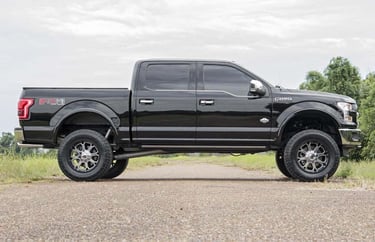
Most trucks leave the factory with the rear sitting higher than the front. That difference is called rake.
A leveling kit raises the front of the truck so the stance looks more even from front to rear.
Why do trucks have rake in the first place? Part of the reason is load capacity. Once you put weight in the bed or add trailer tongue weight, the rear suspension compresses. Starting with the rear slightly higher gives the truck room to settle under load.
For many owners, though, the factory nose-down look is the first thing they want to change.
A leveling kit is a good fit if you want to:
- Reduce the factory rake
- Add a little front-end clearance
- Fit a slightly larger tire
- Keep the truck close to stock height
- Make a smaller change without jumping into a full lift
Depending on the truck, Rough Country leveling kits use different designs, including strut spacers, loaded struts, coil spacers, torsion-bar components, or other application-specific parts.
That’s also why two kits labeled “2-inch leveling kit” do not always work the exact same way.
Get the Latest from Rough Country
Sign up for our newsletter to receive product updates, exclusive deals, and off-road tips straight to your inbox.
What Does a Lift Kit Do?
A suspension lift raises the vehicle by changing or repositioning parts of the suspension.
The taller you go, the more involved the system usually becomes.
A smaller lift might use springs, struts, spacers, shocks, or control arms. Taller kits often need more parts to keep the suspension and steering geometry where they need to be. Depending on the application, that might include crossmembers, knuckles, brackets, differential drops, blocks, or other components.
The biggest difference is what the added height gives you.
A lift kit makes more sense if you want:
- More overall ride height
- Greater ground clearance
- Larger tires
- More room around trail obstacles
- A noticeably taller stance
- A setup built around more serious off-road use
If you already know you want bigger tires, more clearance, or a much taller truck, a lift kit is usually where the conversation starts.
How Much Taller Is a Lift Kit Than a Leveling Kit?
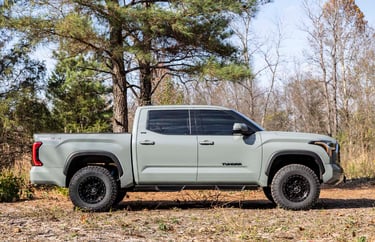
Leveling kits commonly add around 1 to 2.5 inches of front ride height on many applications.
Lift kits cover a much wider range. Rough Country offers suspension systems starting around 2 inches and extending to 6 inches and higher on certain trucks.
One thing worth paying attention to: the number on the kit does not always tell you what the final stance will look like.
Some 2-inch systems are designed to level the truck. Others raise the truck while keeping some of the factory rake.
That matters if your main goal is appearance.
Before choosing a kit, check whether the listed height applies to the front, the rear, or the whole truck. Also check whether the finished truck sits level or keeps some rake.
Which Fits Larger Tires: A Leveling Kit or Lift Kit?
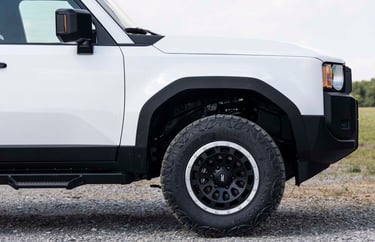
A lift kit generally gives you more room for larger tires.
A leveling kit still opens up more tire options on many trucks, but there is no universal rule such as “2 inches equals 33s” or “6 inches equals 35s.”
Fitment depends on several things:
- Year, make, and model
- Two-wheel drive or four-wheel drive
- Trim level
- Wheel diameter
- Wheel width
- Offset
- Backspacing
- Tire width
- Suspension design
- Amount of trimming
For example, some current Rough Country Ford F-150 applications with around 2 inches of lift list 33-inch tire combinations. Taller F-150 systems in the 6-inch range list certain 35-inch combinations.
Even then, some wheel and tire combinations still need minor trimming.
That’s why the best way to choose lift height is to start with the tire size you want and work backward.
Pick the tire first. Then check what suspension height, wheel width, offset, and trimming requirements match your exact truck.
Does a Leveling Kit Affect Ride Quality?
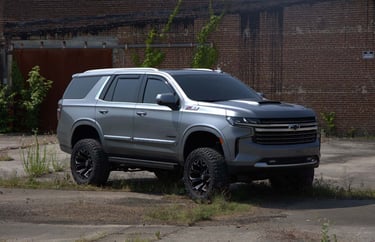
It depends on the kit and how the extra height is created.
A simple spacer-style leveling kit keeps more of the factory suspension in place. A system with replacement struts, springs, or other suspension parts changes more.
Many Rough Country leveling kits are designed to keep ride quality close to stock for their listed applications. The exact result still depends on the truck and suspension setup.
Tires also play a role.
If you add heavier wheels, wider tires, or more aggressive off-road tires at the same time, you might notice more road feel, steering weight, or tire noise. Those changes are not always coming from the leveling kit itself.
Alignment matters too.
Any time you change suspension height, follow the instructions for your specific kit and complete an alignment when required. Proper alignment helps with handling, tire wear, and steering feel.
Which Costs More: A Lift Kit or Leveling Kit?
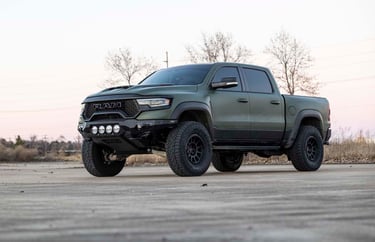
A leveling kit usually costs less.
The reason is simple. Most leveling kits use fewer parts and take less time to install.
Lift kits get more expensive as the height and complexity go up. Taller systems often include more suspension and steering components, and installation takes longer.
The suspension kit is not always the biggest expense, either.
Your full budget might also include:
- Wheels
- Tires
- Alignment
- Professional installation
- Speedometer calibration
- Additional suspension components
- Driveline changes required by the specific application
If you only want to level the stance and move up slightly in tire size, a leveling kit keeps the project simpler.
If you’re planning a full wheel, tire, and suspension setup, look at the total build cost instead of comparing kit prices alone.
Is a Leveling Kit or Lift Kit Better for a Daily Driver?
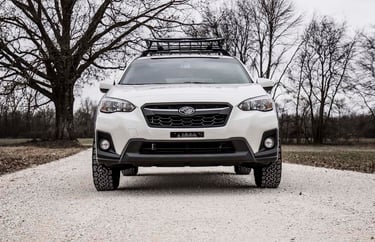
For most trucks that spend nearly all their time on pavement, a mild leveling kit is often enough.
You get a more level stance and some extra tire clearance without adding a lot of height.
A lift kit still works on a daily driver. Plenty of lifted trucks spend every weekday commuting to work.
The bigger question is how much lift you want to live with every day.
As the truck gets taller, a few things become more noticeable:
- Step-in height
- Parking garage clearance
- Loading items into the bed
- Steering feel
- Fuel use
- Acceleration with heavier tires
- Braking feel
- Center of gravity
A moderate lift often gives you the look and tire clearance you want without making the truck feel completely different.
If your truck rarely leaves pavement, you do not need six inches of lift simply because six inches is available.
Choose the height around what you want the truck to do.
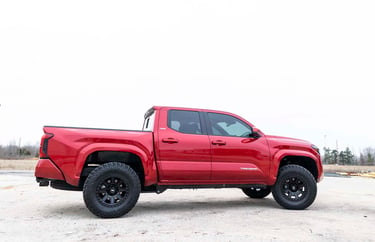
Which Is Better for Off-Road Driving?
For light off-road use, a leveling kit might be plenty.
If your truck mostly sees dirt roads, hunting property, farm roads, fire roads, or easier trails, a small amount of added clearance might cover what you need.
A lift becomes more useful as the terrain gets rougher.
More suspension height gives the truck more clearance around the body and chassis. Larger tires also raise the axles farther from the ground.
Those two things work together.
If you regularly deal with rocks, deep ruts, washouts, mud, or uneven terrain, extra clearance starts to matter more.
Your terrain should decide how much lift you need, not the tallest option available.
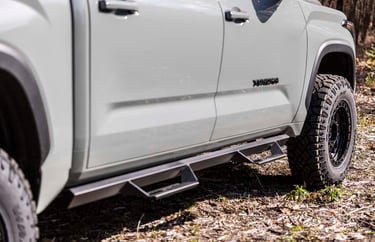
What About Towing and Hauling with a Leveling Kit?
If you tow or haul often, factory rake deserves some thought before you level the truck.
Remember, that higher rear stance gives the truck room to settle once weight is added.
If you remove most of the rake and then load the bed or hook up a trailer, the rear might sit lower than the front.
A leveling kit also does not increase your truck’s factory towing or payload ratings.
Neither does a lift kit.
Suspension height does not raise the manufacturer’s:
- Tow rating
- Payload rating
- Gross Vehicle Weight Rating
- Gross Axle Weight Rating
If towing is a major part of how you use your truck, think about the complete setup. Suspension height, tire load rating, wheel specs, rear suspension behavior, trailer tongue weight, and the truck manufacturer’s limits all matter.
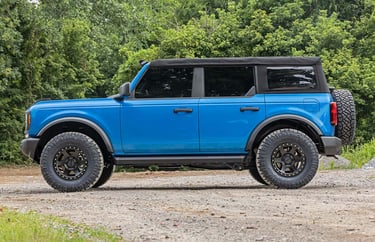
When Does a Leveling Kit Make More Sense?
A leveling kit makes sense when you like most things about your truck but want to clean up the stance.
It is usually the better fit if your goals are:
- A more level appearance
- Slightly larger tires
- Mild added clearance
- Lower cost
- Simpler installation
- Minimal change to overall height
For a daily-driven truck that does some light off-road work, a level often gives you what you want without going farther than necessary.
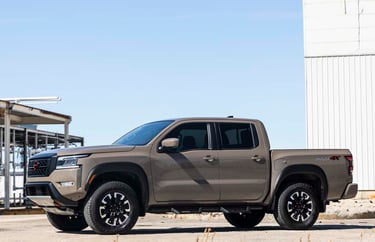
When Does a Lift Kit Make More Sense?
A lift kit makes more sense when your plans go beyond fixing the factory rake.
If bigger tires, increased ground clearance, more trail use, or a taller stance are high on your list, a suspension lift gives you more room to build around those goals.
Before choosing one, ask yourself three things:
- What tire size do I want?
- How do I use my truck most of the time?
- How much extra height do I want to deal with every day?
If your answers are “slightly bigger tires, mostly street driving, and a level stance,” start with leveling kits.
If your answers are “bigger tires, more clearance, and regular off-road use,” start with suspension lift kits.
Then check the exact Rough Country fitment information for your year, make, model, drivetrain, wheel setup, and tire size before ordering.
FAQs
Is a leveling kit better than a lift kit?
Neither is better for every truck. A leveling kit is a good choice for reducing factory rake and adding mild tire clearance. A lift kit makes more sense when you want greater ride height, larger tires, more ground clearance, or more off-road capability.
Does a leveling kit affect ride quality?
Ride quality depends on the kit design and the truck. Many leveling kits are designed to keep the ride close to stock, while systems with replacement struts or springs change more of the suspension. Wheel and tire changes also affect how the truck feels.
How much lift do I need for larger tires?
Start with the tire size you want and check the fitment requirements for your exact truck. Lift height alone does not determine tire fitment. Wheel width, offset, backspacing, trim level, suspension design, and trimming all play a role.
Is a lift kit worth it for a daily driver?
A lift kit makes sense on a daily driver if you want the added tire clearance, ground clearance, or taller stance enough to accept the added step-in height and other changes that come with raising the truck. If you mainly want to remove factory rake, a leveling kit might be enough.
Does a leveling kit increase towing capacity?
No. A leveling kit does not increase the truck’s factory tow rating, payload rating, GVWR, or axle ratings. Stay within the limits set by the vehicle manufacturer.
Do I need an alignment after installing a leveling kit or lift kit?
Many suspension-height changes require an alignment after installation. Follow the instructions for your specific kit and have the alignment checked after the suspension work is complete.
Get the Latest from Rough Country
Sign up for our newsletter to receive product updates, exclusive deals, and off-road tips straight to your inbox.

![Ford Leveling Coil Springs [9265]](https://media.prod.roughcountry.com/cdn-cgi/image/width=155,format=webp,fit=cover/media/catalog/product/f/o/ford-lift-kit_9285-small.jpg)
![Ford 2.5" Leveling Torsion Bar Keys [7544]](https://media.prod.roughcountry.com/cdn-cgi/image/width=155,format=webp,fit=cover/media/catalog/product/f/o/ford-lift-kit_7544-base.jpg)