Free shipping sitewide!* View Details
Free shipping sitewide!* View Details

Roof Rack vs. Bed Rack: Which Is Better for Your Truck?

September 15, 2026
0
roof rack
roof top rack
Roof Rack
bed rack
What Is a Roof Rack?
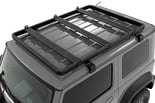
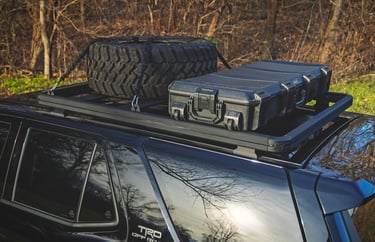
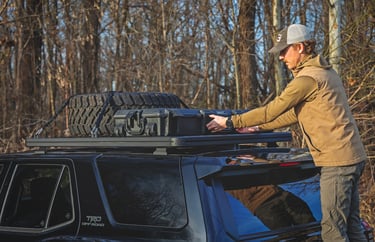
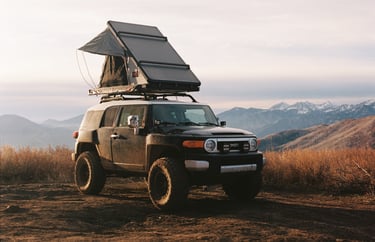
A roof rack mounts above the cab or roof of your truck, Jeep, or SUV and creates an additional place to secure cargo.
Depending on the rack and vehicle, owners often use roof racks for:
- Luggage
- Camping gear
- Storage boxes or bags
- Recovery gear
- Outdoor equipment
- Other oversized items approved for the rack
The biggest benefit is location. Since the cargo sits above the vehicle, a roof rack leaves your truck bed available for coolers, tools, camping supplies, or other gear.
Roof racks also make sense for Jeeps and SUVs without an open pickup bed.
What Is a Truck Bed Rack?
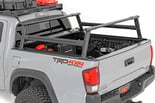
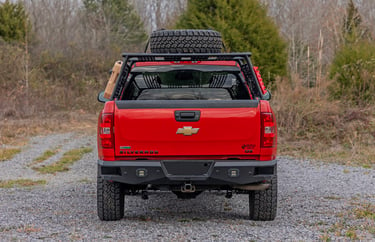
A truck bed rack mounts above or along the sides of the pickup bed and creates another level for carrying cargo.
Instead of placing everything inside the bed, you gain mounting space above it while keeping at least part of the bed area accessible.
Bed racks are popular for:
- Camping equipment
- Overlanding gear
- Recovery equipment
- Awning setups
- Storage systems
- Accessory mounts
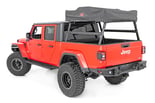
- Rooftop tents on approved rack and tent combinations
Many bed racks also provide mounting locations along the sides or crossbars. Some Rough Country models use T-slot channels, which provide adjustable mounting points for compatible accessories.
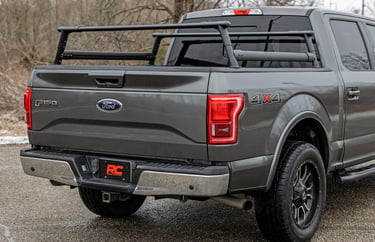
Roof Rack vs. Bed Rack: What Is the Main Difference?
The main difference between a roof rack and a bed rack is where the cargo sits. A roof rack places cargo above the cab or vehicle roof. A bed rack places cargo above the pickup bed.
That difference affects bed access, loading height, accessory choices, and which vehicles work with each setup.
|
If you want to... |
Better Starting Point |
|
Keep your truck bed completely open |
Roof rack |
|
Carry gear above the truck bed |
Bed rack |
|
Add rooftop storage to an SUV or Jeep |
Roof rack |
|
Build an overlanding setup around the truck bed |
Bed rack |
|
Carry a rooftop tent |
Depends on rack rating and application |
|
Carry everyday luggage or camping gear |
Either, depending on vehicle |
Think about where you want your cargo before comparing individual products. A truck owner who regularly fills the bed with equipment has different needs than someone building a dedicated camping setup around the bed.
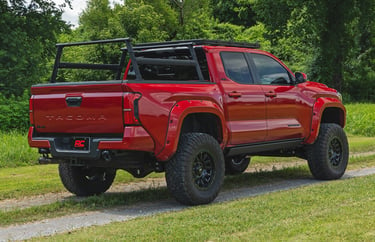
Which Rack Is Better for Overlanding?
A bed rack is often the better starting point for a pickup-based overlanding setup because it places gear directly above the bed and leaves room below for additional storage.
That layout gives you several areas to organize equipment. You might keep larger containers, coolers, or camping supplies in the bed while attaching approved accessories higher on the rack.
Some bed racks also provide side mounting locations for gear and accessories, which helps keep equipment organized and easier to reach.
A roof rack still plays an important role in many overlanding builds. It works well for lighter or less frequently accessed cargo and helps free space elsewhere in the vehicle.
Some owners use both systems when their vehicle and rack ratings support the load.
The key is weight management. Check the rack rating, vehicle limits, mounting system, and accessory requirements before loading either setup.
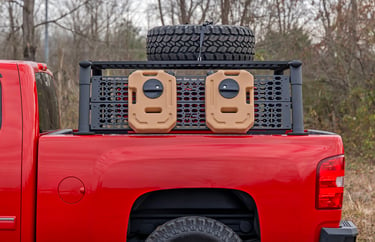
Which Rack Gives You More Cargo Space?
A roof rack gives you additional storage without occupying the truck bed. A bed rack creates storage above the bed while still leaving usable space underneath.
Which one gives you more usable cargo room depends on how you use your truck.
Choose a roof rack when your priority is keeping the entire pickup bed open for cargo.
Choose a bed rack when you want to organize cargo on multiple levels around the bed. For example, camping equipment might stay inside the bed while longer or larger approved items ride above it.
Loading height matters too. Roof-mounted cargo often sits higher than gear carried on a lower bed rack. If you frequently load heavy containers or equipment, consider how easily you will reach and secure those items.
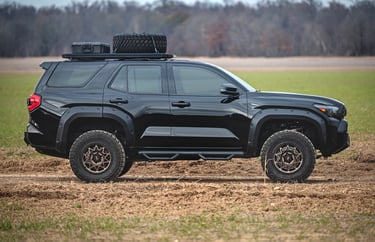
Can You Use a Bed Rack with a Tonneau Cover?
Some bed racks work with certain tonneau covers, but compatibility is not universal.
Both products often use the bed rails for mounting, which means the rack and cover sometimes compete for the same space. Tonneau style also matters.
Always check the fitment notes for the exact rack and cover combination instead of assuming they work together.
Rough Country's current 2024–2026 Tacoma bed rack, for example, states that it does not fit vehicles equipped with a bed cover. The 2005–2023 Tacoma aluminum bed rack specifically states that it does not fit trucks equipped with tri-fold or retractable bed covers.
Other rack designs and mounting systems have different requirements.
If you already own a tonneau cover, check compatibility before buying the bed rack. If you plan to buy both, choose the two products as a system rather than selecting each separately.
How Much Weight Can a Roof Rack or Bed Rack Hold?
Roof rack and bed rack weight limits depend on the specific product, mounting method, vehicle, and whether the vehicle is moving or parked.
Never assume two racks share the same rating simply because they look similar.
For example, Rough Country lists a 250-pound maximum load for its 2015–2018 Ford F-150 roof rack.
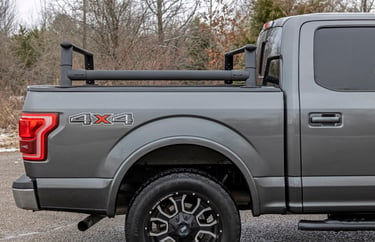
Several current Rough Country aluminum bed racks list two different ratings:
- 400 pounds dynamic load
- 750 pounds static load
Those ratings appear on current applications including the F-150, Silverado 1500, and Tacoma.
Dynamic load refers to weight supported while the vehicle is moving.
Static load refers to weight supported while the vehicle is parked.
This distinction matters for camping equipment and rooftop tents. A rack with a higher static rating does not mean the same weight is approved while driving.
You also need to account for the weight of the rack, accessories, cargo, and mounting equipment. Follow both the rack manufacturer's specifications and the vehicle manufacturer's limits.
Can You Put a Rooftop Tent on a Truck Bed Rack?
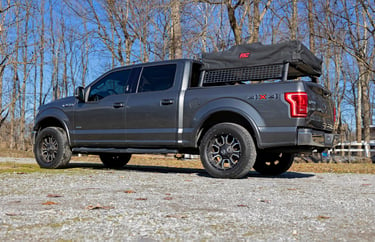
A rooftop tent belongs on a bed rack only when the rack, tent, mounting hardware, and vehicle application are approved to work together.
Do not choose a bed rack based on weight rating alone.
Physical dimensions, crossbar spacing, mounting points, tent hardware, and product-specific restrictions matter too.
For example, Rough Country's current F-150 bed rack lists a 750-pound static rating and 400-pound dynamic rating, but its fitment notes also state that the rack does not work with Rough Country's hard-shell rooftop tent.
That example shows why checking the full product notes matters. A rack might support enough weight on paper while still being incompatible with a specific tent.
How Do You Choose Between a Roof Rack and Bed Rack?
Start with your vehicle and the gear you carry most often.
1. Check vehicle fitment
Verify the year, make, model, trim, body configuration, cab style, and bed length listed for the rack.
A rack designed for one bed length might not fit another.
2. Decide what you plan to carry
Make a list of your usual cargo. Camping gear, luggage, recovery equipment, kayaks, storage containers, and rooftop tents place different demands on a rack system.
3. Check the weight rating
Look at both the rack rating and the vehicle manufacturer's limits.
If the rack lists separate static and dynamic ratings, use the correct rating for how the vehicle is being used.
4. Decide how much bed access you need
If you regularly fill the bed with tools, equipment, or large cargo, a roof rack keeps the bed clear.
If you want storage above the bed as part of a camping or overlanding system, a bed rack often makes more sense.
5. Think about loading height
Roof racks place cargo higher. Consider how often you need to load and unload equipment and whether the added height works for your garage, parking areas, trails, and daily driving.
6. Check tonneau-cover compatibility
Do not assume a bed rack fits with your current bed cover.
Read both products' fitment notes before ordering.
7. Look at accessory mounting options
If you plan to add an awning, storage mounts, recovery equipment, or other accessories, check which mounting points and channels the rack provides.
8. Review installation requirements
Installation varies by product. Some racks mount with factory locations or clamps, while other applications require drilling, or additional hardware.
Read the installation instructions before buying so you know what the job involves.
Which Rack Should You Choose?
Choose a roof rack when your priority is adding cargo space while leaving the truck bed open.
Choose a bed rack when you want gear mounted above the bed or you are building a truck-based camping or overlanding setup.
The final choice still comes down to your vehicle and equipment. Compare fitment, weight ratings, bed-cover compatibility, accessory mounting, installation requirements, and the type of cargo you carry.
Rough Country offers roof racks, truck bed racks, cargo boxes, cargo bags, and other storage options in its Racks & Cargo Carriers lineup. Start with your vehicle information, then compare the products designed for your specific application.
FAQs
Is a bed rack better than a roof rack?
A bed rack is often the better choice for truck-based overlanding or carrying equipment above the bed. A roof rack works well when you want added cargo capacity while keeping the truck bed completely open. The better option depends on your vehicle and how you carry gear.
Can you put a rooftop tent on a truck bed rack?
Only when the rack, rooftop tent, mounting hardware, and vehicle application are approved to work together. Check both static and dynamic weight ratings along with product-specific compatibility notes before installing a tent.
Do bed racks work with tonneau covers?
Some do, while others do not. Compatibility depends on how the bed rack and tonneau cover mount to the bed rails. Check the exact rack and cover combination before purchasing either product.
What is the difference between static and dynamic rack weight?
Dynamic weight is the load a rack is rated to support while the vehicle is moving. Static weight is the load supported while the vehicle is parked. Static ratings are often higher, so use the correct rating for your situation.
Is a bed rack good for everyday use?
A bed rack works well for everyday use when you regularly carry equipment above the bed or need accessory mounting points. If you often haul tall or oversized items inside the bed, check how the rack affects bed access before choosing one.