Free shipping sitewide!* View Details
Free shipping sitewide!* View Details

UTV Windshield Options: Finding the Right Setup for Your Ride
September 16, 2026
0
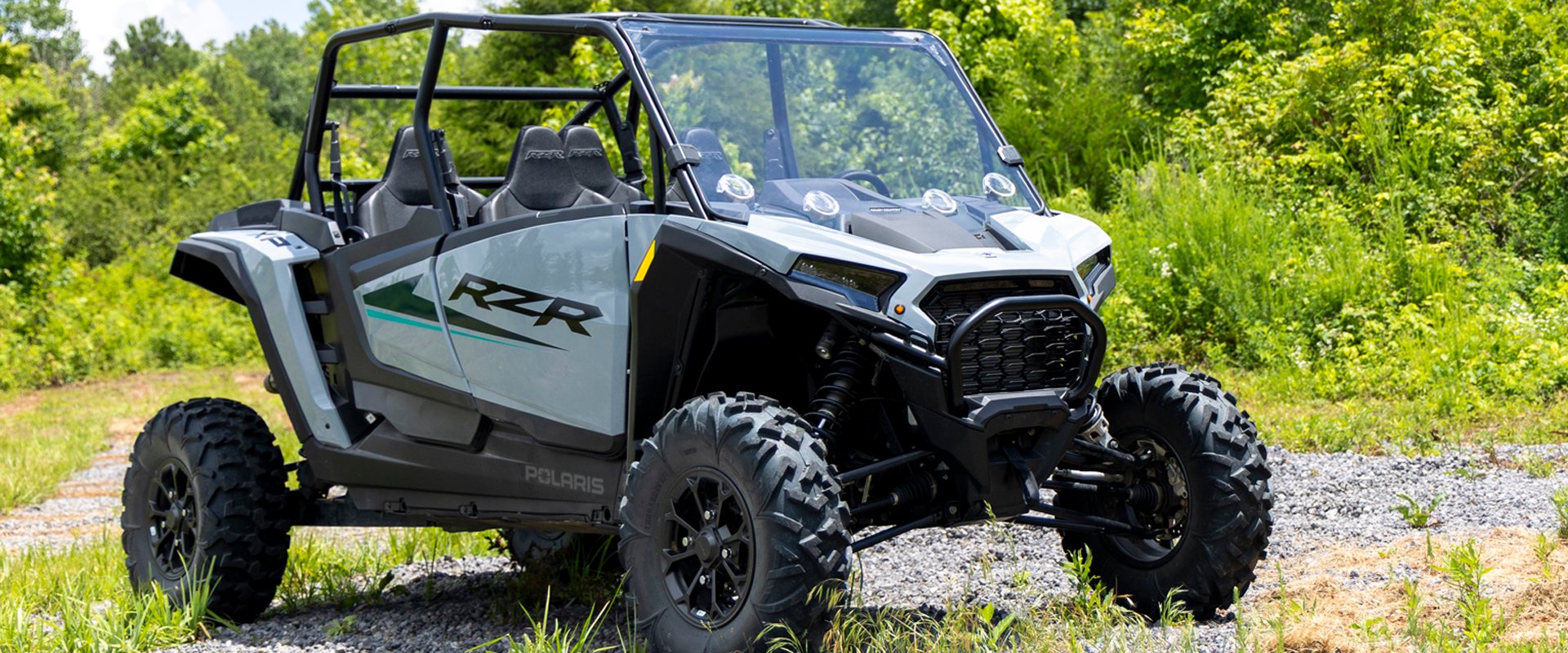
UTV Windshields
Front UTV windshields
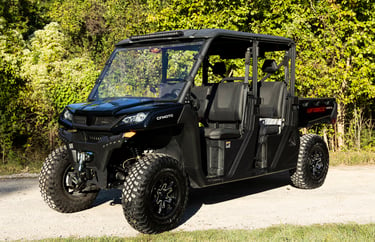
UTV side windshields
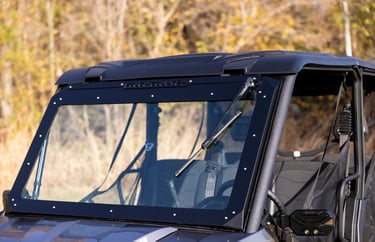
rear window UTV
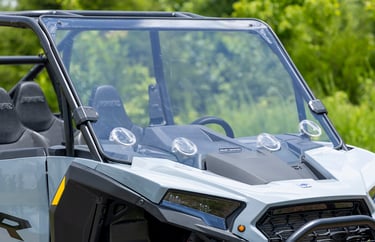
tilted UTV windshield
What UTV Windshield Options Are Available?
UTV windshield options range from simple fixed front protection to adjustable glass windshields and more enclosed cab setups.
The main Rough Country options include:
- Full polycarbonate windshields
- Vented full windshields
- Electric tilt glass windshields
- Side windows for select applications
- Clear rear panels
- Tinted rear panels
- Bed-side rear windows for select applications
Your ideal setup depends on weather, terrain, airflow preferences, and vehicle fitment.
Get the Latest from Rough Country
Sign up for our newsletter to receive product updates, exclusive deals, and off-road tips straight to your inbox.
What Is a Full UTV Windshield?
A full UTV windshield covers the front cab opening and gives you protection from wind, rain, mud, bugs, branches, and other trail debris.
This type works well for riders who spend time in changing weather, wooded trails, muddy conditions, or colder temperatures. Full windshields also make sense for UTVs used for hunting, farming, property maintenance, and other work.
Rough Country offers scratch-resistant full polycarbonate windshields for several UTV platforms, including select Can-Am, Honda, John Deere, Polaris, and other models. Current full windshield designs use impact-resistant polycarbonate, contoured vehicle-specific shapes, and rubber seals designed to help keep out wind, moisture, dust, and debris.
Polycarbonate is a popular choice for off-road use because of its impact resistance and lighter weight compared with glass.
The biggest consideration with a fixed full windshield is airflow. Covering the entire front opening reduces the amount of outside air entering the cab. If you frequently ride in warmer weather, a vented or adjustable windshield gives you greater control.
What Is a Vented UTV Windshield?
A vented full windshield gives you full front coverage along with adjustable airflow.
This option suits riders who want protection from trail debris and weather without keeping the front of the cab completely closed.
Rough Country vented windshields use adjustable vents on select applications. For example, the Can-Am Commander Max vented full windshield features four vents with 360-degree rotation. Riders adjust the vents between open, partially open, and closed positions and direct incoming air where needed. The same model uses 1/4-inch polycarbonate and a rubber seal around the windshield.
Vented windshields make sense for:
- Spring and fall riding
- Warm-weather trails
- Long rides
- Changing temperatures
- Riders using their UTV throughout the year
Close the vents when you want greater protection from cold air and weather. Open them when you want more airflow through the cab.
For riders who want full windshield coverage without giving up airflow control, a vented windshield provides a practical middle ground.
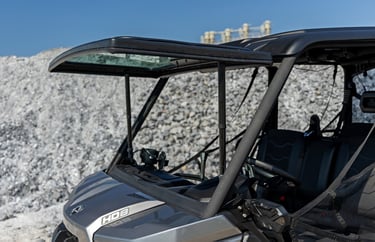
What Is an Electric Tilt UTV Windshield?
An electric tilt windshield uses an electric actuator to adjust the position of the windshield with the push of a button.
Instead of choosing between a fixed windshield and an open front, you adjust how far the windshield opens based on the conditions.
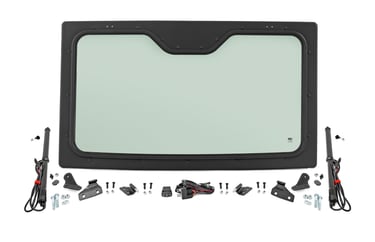
Rough Country currently offers electric tilt glass windshields for select Can-Am Defender, Polaris Ranger XP 1000, and Honda Pioneer 1000 applications.
Rough Country's electric tilt models use DOT-approved safety glass and an electrically controlled tilt system. On the Can-Am Defender application, the windshield moves from a slightly open position for light airflow to a more open position for increased ventilation. An integrated edge seal helps block most wind, dust, and water when the windshield is closed.
Electric tilt windshields fit riders who want:
- Adjustable airflow
- Glass rather than polycarbonate
- Strong scratch resistance
- Push-button operation
- More control across changing weather conditions
Fitment deserves extra attention with this type of windshield. Roof clearance varies by vehicle and roof design. Some applications require minor roof trimming for windshield movement, so read the product-specific fitment notes before installation.
Glass or Polycarbonate UTV Windshield?
Both materials have advantages, so your riding priorities should guide the choice.
Polycarbonate works well for riders who prioritize impact resistance and lower weight. Rough Country uses impact-resistant polycarbonate across its full and vented windshield lineup.
Glass offers strong scratch resistance and clear visibility. Rough Country's electric tilt windshields use DOT-approved safety glass on supported applications.
Think about where you ride most.
If your UTV sees rough trails, branches, rocks, mud, and heavy off-road use, polycarbonate offers a strong combination of durability and weight.
If you want glass visibility, scratch resistance, and an adjustable windshield, an electric tilt model offers another route on supported UTVs.
What Do UTV Side Windows Do?
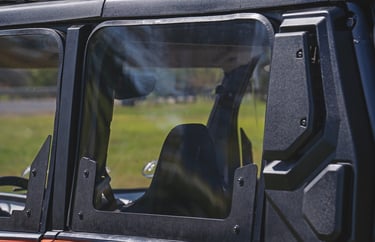
Side windows extend protection beyond the front windshield by closing more of the cab opening.
They help reduce exposure to wind, rain, mud, dust, branches, and other debris entering from the sides. Side windows pair well with a front windshield and rear panel when you want a more enclosed cab.
Rough Country currently offers scratch-resistant polycarbonate side windows for select Polaris XPEDITION ADV 5 models. These windows feature hard coatings on the inside and outside surfaces, rubber seals, and a design built for quick installation and removal.
Side windows make the most sense for riders who:
- Ride in colder weather
- Travel through mud or heavy brush
- Use their UTV for hunting or work
- Want greater protection around the cab
- Already run a front windshield and want more coverage
Availability is vehicle-specific, so search by year, make, and model before building a full enclosure setup.
Why Add a Rear Panel to a UTV?
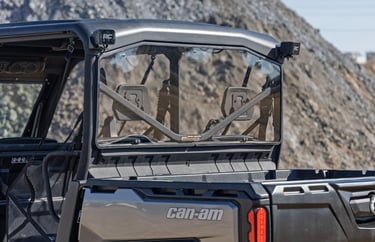
A rear panel closes the back of the cab and adds another layer of protection from dust, dirt, water, and debris.
Rear panels become especially useful when paired with a front windshield. Installing a front windshield changes airflow around the cab. On some setups, air moving around the vehicle pulls dust forward from behind the seats.
A rear panel helps separate the passenger compartment from the cargo and rear-wheel area while reducing the amount of debris entering from behind.
Rough Country offers scratch-resistant polycarbonate rear panels for select Can-Am, CFMOTO, Polaris, Segway, and other applications. Current models use contoured designs, hard-coated surfaces, and rubber seals for a close fit around the cab.
What Is the Benefit of a Tinted Rear UTV Window?
A tinted rear panel gives you the coverage of a rear windshield while reducing glare and sunlight entering from behind.
Rough Country currently offers a tinted scratch-resistant rear panel for select Polaris Ranger XP 1000 applications. The panel uses impact-resistant polycarbonate with hard coatings on both sides. The tint reduces glare, adds sun protection, and gives the rear of the cab a darker appearance.
A tinted rear panel makes sense if glare from behind bothers you or if you prefer a darker rear window while keeping visibility through the panel.
Keep in mind that tinted rear panel availability depends on the UTV application.
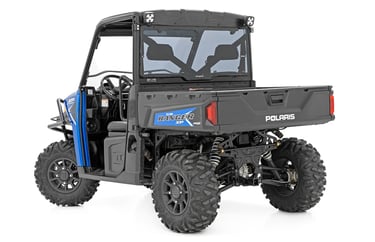
Do You Need Front, Side, and Rear UTV Windows?
You do not need every panel for every type of riding.
Think of the setup in stages.
A full front windshield handles most incoming wind and trail debris.
A vented or electric tilt windshield adds airflow control.
Side windows increase protection from weather and debris entering beside the driver and passengers.
A rear panel closes the back of the cab and helps manage dust and debris entering from behind.
Riders who use a UTV year-round, hunt, work outdoors, or ride in cold and muddy conditions often benefit from greater cab coverage. Recreational riders in warmer climates might prefer a front windshield with more ventilation and fewer surrounding panels.
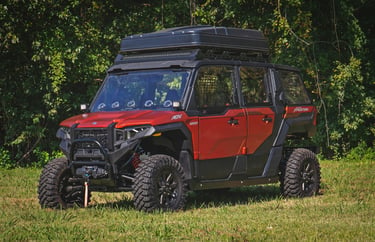
How Do You Choose the Right UTV Windshield Setup?
Start with your normal riding conditions rather than choosing solely by appearance.
Ask yourself:
- Do you ride mostly in hot or cold weather?
- Do you regularly deal with rain, mud, dust, or brush?
- How important is adjustable airflow?
- Do you prefer glass or polycarbonate?
- Do you want an open cab or greater enclosure?
- Would side windows improve your normal rides?
- Does dust enter from behind your seats?
- Would a clear or tinted rear panel work better for your setup?
Next, check exact fitment.
UTV windshields and windows are vehicle-specific. Year, make, model, trim, roof design, factory equipment, and other accessories affect fit.
Rough Country's UTV and ATV windshield category lets you enter your vehicle before viewing available windshield and window options.
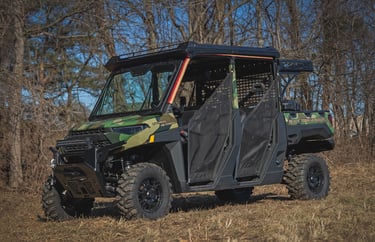
FAQs
What type of UTV windshield is best?
The right UTV windshield depends on your riding conditions. A full windshield gives you broad front protection, a vented windshield adds adjustable airflow, and an electric tilt windshield gives you push-button ventilation with a glass panel on supported applications.
Are vented UTV windshields worth it?
A vented windshield works well if you want full coverage while keeping control over airflow. Adjustable vents let you increase ventilation during warmer rides and close them when conditions turn colder or wetter.
What is the advantage of an electric tilt UTV windshield?
An electric tilt windshield adjusts with the push of a button, giving you greater control over airflow without removing the windshield. Rough Country electric tilt models also use DOT-approved safety glass on supported applications.
Does a rear UTV windshield help with dust?
A rear panel helps reduce dust and debris entering the cab from behind. Front windshields change airflow around some UTVs, so adding a rear panel often improves protection when building a more enclosed cab.
Why choose a tinted rear UTV window?
A tinted rear panel reduces glare and sunlight coming through the rear of the cab while still providing rear-window coverage. Rough Country offers a tinted scratch-resistant polycarbonate rear panel for select Polaris Ranger XP 1000 applications.
Are UTV windshields universal?
No. UTV windshields and window panels are generally designed around specific vehicles. Always verify year, make, model, trim, roof compatibility, and product fitment notes before ordering.