Free shipping sitewide!* View Details
Free shipping sitewide!* View Details

Steps and Running Boards: Which Type Is Right for You?
August 5, 2026
0
Nerf Steps
steps
Power Running Boards
running boards
AC2 Running boards
drop steps
Running Boards: Wide and Comfortable
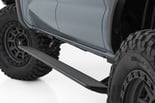
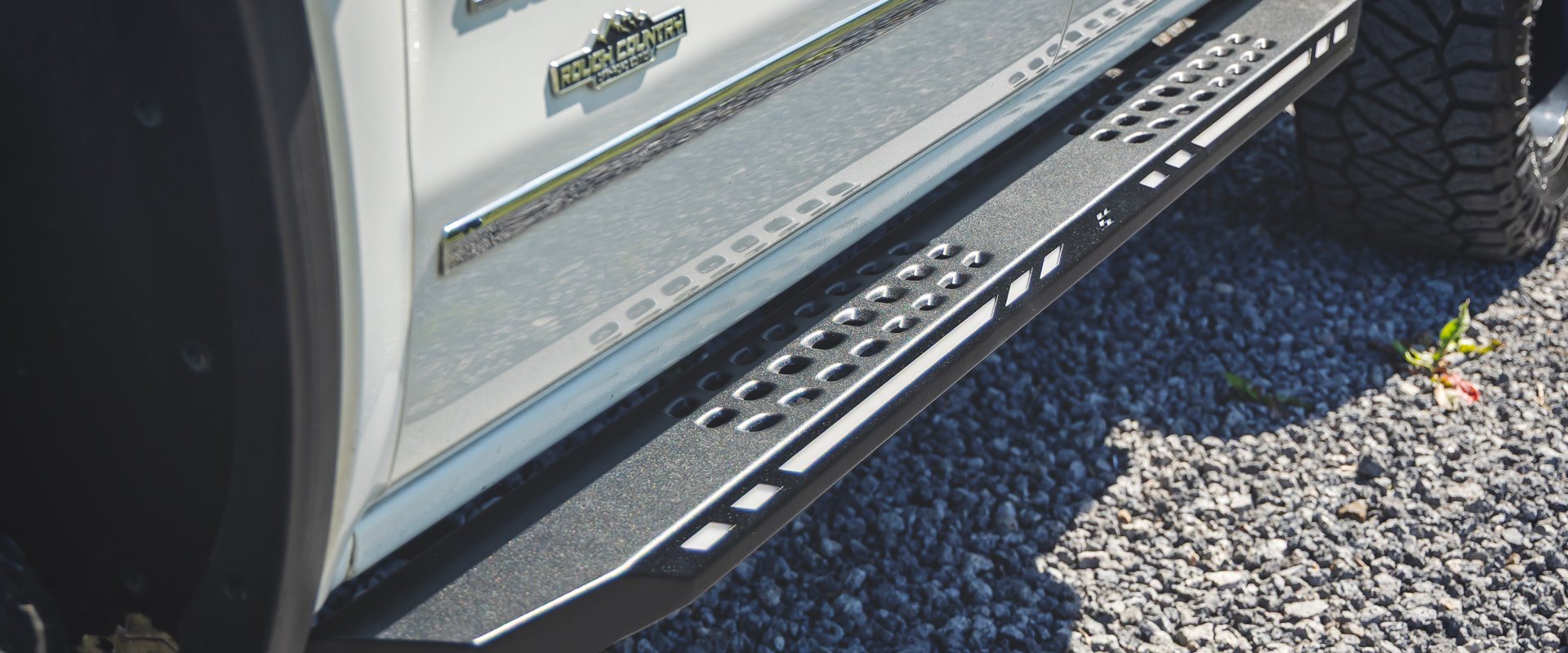
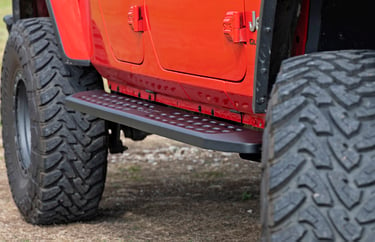
Running boards extend along the cab and provide a wide, flat stepping surface. They work well for families, work trucks, daily drivers, and anyone who wants easier access across each door opening.
Their larger surface gives passengers more room to place their feet than most tube-style nerf steps. This makes running boards a strong choice for children, older passengers, or anyone climbing into a taller truck while carrying bags or gear.
Rough Country’s running board lineup includes several styles, such as the BA2, HD2, OV2, RPT2, TR2, and AC2 Series. Available designs range from rugged steel steps to lightweight aluminum boards and models with integrated lighting. Current fitments include popular Ford, Chevrolet, GMC, Ram, Toyota, Nissan, and Bronco applications.
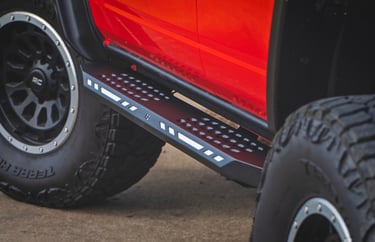
The AC2 Series adds amber and white LED lighting beneath the doors. This helps illuminate the step area at night while giving the vehicle a more customized look.
Running boards are a good fit when you want:
- A wide step surface
- Easier entry for passengers
- Coverage across the cab
- A clean, finished appearance
- Several material and style choices
The main drawback involves ground clearance. Most fixed running boards sit below the rocker area, so they might not suit vehicles used on rocky or deeply rutted trails.
Get the Latest from Rough Country
Sign up for our newsletter to receive product updates, exclusive deals, and off-road tips straight to your inbox.
Nerf Steps: Simple and Rugged
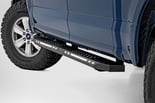
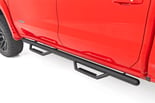
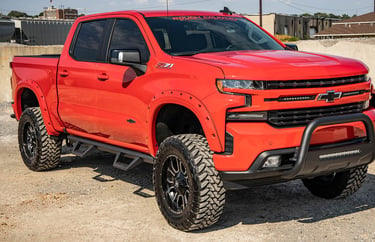
Nerf steps use a tube or rail-style design with stepping areas near the doors. They provide easier entry without covering as much of the vehicle’s side as a broad running board.
Their open design gives a truck or Jeep a rugged appearance and often leaves more open space beneath the rocker area. Rough Country offers cab-length, full-length, wheel-to-wheel, three-inch tube, and oval nerf step options for many truck, Jeep, SUV, and Bronco applications.
Cab-length nerf steps cover the passenger area. Wheel-to-wheel versions extend farther toward the rear wheel and provide an extra stepping point near the front of the bed. This extra access helps when reaching into a toolbox, loading cargo, or securing items in the bed.
Nerf steps are a good fit when you want:
- A rugged truck or Jeep style
- Defined stepping areas near each door
- Less visual bulk than a wide running board
- Cab-length or wheel-to-wheel coverage
- A practical step at a lower price than power boards
Nerf steps still sit below the rocker panel. They should not be treated as rock sliders unless the product is specifically designed and rated for that purpose.
Drop Steps: Easier Access for Taller Vehicles
Lifting a truck or Jeep increases the distance between the cab and the ground. Fixed steps rise with the vehicle, which might leave them too high for comfortable entry.
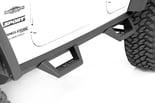
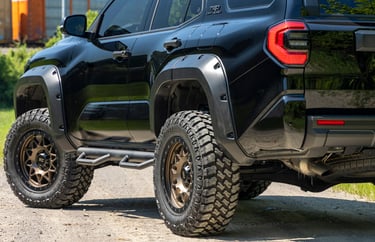
Drop steps place the stepping surface lower than the main rail. This reduces the height passengers need to climb and works well on lifted vehicles or factory trucks with tall cab floors.
Rough Country’s Contoured Drop Steps follow the body lines of Jeep Wrangler and Gladiator models. The SRL2 and SRX2 adjustable aluminum steps offer truck, Tacoma, Tundra, Ranger, and Bronco fitments. Their adjustable step positions let owners place the stepping points where they work best for the doors.
Drop steps make entry easier, but the lower step pockets also reduce clearance in those areas. Drivers who spend time around rocks, stumps, or deep ruts should balance step height against trail clearance.
Drop steps are a good fit when you want:
- Easier access to a lifted vehicle
- A more aggressive appearance
- Individual steps below each door
- Adjustable step placement on select models
- A design suited to trucks, Wranglers, Gladiators, and Broncos
Power Running Boards: Full Steps When Needed
Power running boards extend when a door opens and retract beneath the vehicle after the door closes. They provide a wide stepping surface without leaving a fixed board in the same lowered position all the time.
This makes them a strong option for taller daily drivers, lifted trucks, and vehicles that need passenger comfort without the look of a full-time running board.
Rough Country’s HT Series uses aluminum boards and automatic operation. Current applications include Ford, Chevrolet, GMC, Ram, Toyota, Bronco, and other popular platforms. Rough Country also offers electric running board options for select Jeep Wrangler models.
Power boards cost more than fixed steps and include motors, wiring, sensors, and moving parts. Proper installation matters, especially when routing wiring near heat, water, road debris, and moving components.
Power running boards are a good fit when you want:
- A wide and comfortable step
- Automatic extension when doors open
- A clean look when the boards retract
- Improved clearance compared with a fixed board
- Easier access without permanent low-hanging steps
They make the most sense for owners who value both appearance and daily convenience. A basic fixed step might provide better value when cost and simplicity matter most.
Cab Length or Wheel to Wheel?
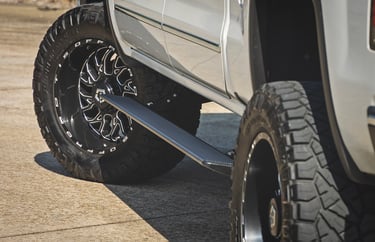
Cab-length steps run beneath the passenger doors. They provide access where most owners need it and work well for daily driving.
Wheel-to-wheel steps extend beyond the cab toward the rear wheel. This creates another stepping point for reaching into the front portion of the truck bed.
Choose cab-length steps when your main goal involves passenger entry. Choose wheel-to-wheel steps when you regularly access cargo, a crossover toolbox, a bed rack, or equipment stored near the front of the bed.
How to Choose the Right Steps
Start with these four questions.
How tall is your vehicle?
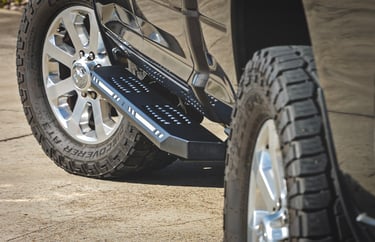
Running boards and nerf steps work well on stock-height and leveled vehicles. Drop steps or power running boards provide easier entry when a suspension lift or larger tires raise the cab farther from the ground.
Who rides with you?
Choose a wide running board or power running board when children, older passengers, or family members need a larger stepping surface. Nerf and drop steps work well for drivers who prefer a smaller, more defined step.
How do you use your vehicle?
Daily drivers often benefit from running boards. Work trucks and vehicles used for frequent bed access might need wheel-to-wheel steps or a separate bed step. Lifted trucks and Jeeps often pair well with drop steps. Mixed-use road and trail builds might benefit from power running boards.
What style fits your build?
Running boards provide broad coverage. Nerf steps offer a simpler tube or rail appearance. Drop steps give lifted vehicles an aggressive look. Power running boards stay less visible when retracted.
Always verify the year, make, model, cab style, bed length, and drivetrain notes before ordering. Similar trucks often use different mounting brackets based on their cab and frame configuration.
FAQs
What is the difference between nerf bars and running boards?
Nerf bars use a tube or open-rail design with stepping areas near the doors. Running boards provide a wider, flatter surface across more of the cab. Running boards favor passenger comfort, while nerf steps offer a lighter and more open appearance.
Do lifted trucks need drop steps?
No, but drop steps often make lifted trucks easier to enter. A lift raises fixed steps farther from the ground. Drop steps lower the stepping point without requiring passengers to make a larger first step.
Are running boards the same as rock sliders?
No. Running boards help passengers enter and exit. Rock sliders protect the rocker area from trail impacts and support different loads. Never rely on a running board as a recovery point, jacking point, or rock slider unless the manufacturer specifically approves that use.
Find the Right Fit for Your Vehicle
The best step is the one that matches your vehicle height and daily needs. Rough Country offers fixed, adjustable, retractable, and bed-access options for a wide range of trucks and Jeeps. Use the vehicle selector to narrow the choices by year, make, model, and cab configuration before comparing styles.