Free shipping sitewide!* View Details
Free shipping sitewide!* View Details

Search products, categories...
How to Choose the Right Trail for Your Vehicle and Skill Level
July 31, 2026
0
off-roading
UTV winches
UTV trail riding
trail riding
trail riding protection
trail riding tips
Understand Off-Road Trail Ratings
Many trail systems classify routes as easy, moderate, difficult, or extreme. These ratings give you a general idea of what to expect, but no universal rating system exists.
Easy trails often include maintained dirt or gravel, gradual grades, and small obstacles. Moderate trails might add deeper ruts, loose climbs, mud, or uneven surfaces requiring more clearance and traction.
Difficult and extreme routes often include large rocks, steep grades, off-camber sections, deep mud, tight turns, and limited recovery access. These trails usually require an experienced driver and a properly prepared vehicle.
Always review the rating system used by the specific park or trail network. A moderate rating at one location might describe conditions another park considers difficult. Rain, erosion, snowmelt, and heavy traffic also make a trail harder than its posted rating suggests.
Know What Your Vehicle Is Ready For
Before choosing a trail, take an honest look at your vehicle’s current setup.
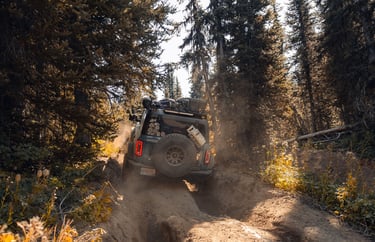
Ground clearance affects your ability to cross rocks and ruts without contacting the frame, skid plates, exhaust, differentials, or other components. Approach, breakover, and departure angles determine how well your vehicle handles steep rises, crests, and drop-offs.
A high-clearance off-road bumper reduces the amount of front overhang in the vehicle’s path. This improves the approach angle and helps the front end clear steeper obstacles. Some off-road bumpers also include winch-mount options, adding a secure location for compatible recovery equipment.
Wheelbase and width matter too. A longer wheelbase often feels stable on open terrain but faces a greater risk of getting hung up on sharp crests. A wider truck or SUV might struggle on narrow wooded trails.
Tires also shape trail capability. Check tread depth, sidewalls, pressure, and tire type before leaving. Worn highway tires respond differently on mud, rocks, or loose gravel than healthy all-terrain or mud-terrain tires.
Four-wheel drive improves traction, but it does not prevent a vehicle from getting stuck. Locking differentials provide more control when a tire loses traction or leaves the ground, though careful throttle use and line selection still matter.
Passengers, tools, camping supplies, bumpers, winches, and other accessories add weight. That weight affects suspension performance, braking, and available clearance.
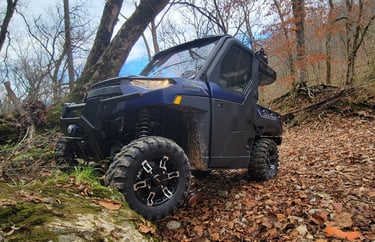
UTV and side-by-side riders face many of the same trail-matching decisions. They also need to consider trail-width restrictions, shorter wheelbases, suspension travel, tire choice, and controlled speeds through technical terrain.
Match Your Vehicle to the Terrain
Each terrain type places different demands on your vehicle.
Maintained dirt and gravel roads are a good starting point for new drivers. They help you learn how your vehicle responds to loose surfaces, washboard sections, and gradual grades.
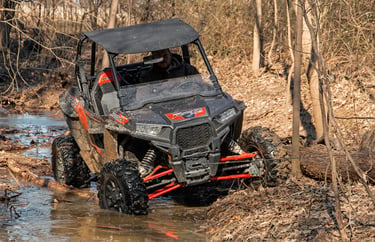
Mud requires traction and a clear recovery plan. Look for deep ruts, standing water, and signs of other vehicles becoming stuck. Excessive wheelspin often digs the tires deeper instead of moving the vehicle forward.
Sand often requires lower tire pressure to increase the tire’s contact area. Use a pressure suited to your vehicle, tires, load, and wheel setup. Carry a portable air compressor so you can restore proper pressure before returning to pavement.
Rocky trails place more emphasis on clearance, tire placement, and underbody protection. A Rough Country suspension lift kit can improve frame and body clearance, change clearance angles, and create room for larger tires on compatible vehicles. Larger tires raise axle-mounted differentials, increasing clearance at some of the lowest points under the vehicle.
Skid plates and differential protection also help shield vulnerable components on rocky trails. They support the vehicle when contact happens, but they do not replace careful line selection.
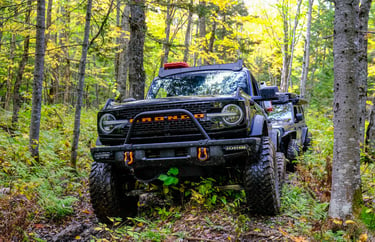
Narrow wooded routes require close attention to vehicle width, mirrors, body panels, and turning space. Deep ruts challenge clearance and wheel placement, while steep climbs and descents require smooth throttle and braking inputs.
Treat Water Crossings With Caution
Water hides obstacles you would normally see from the driver’s seat.
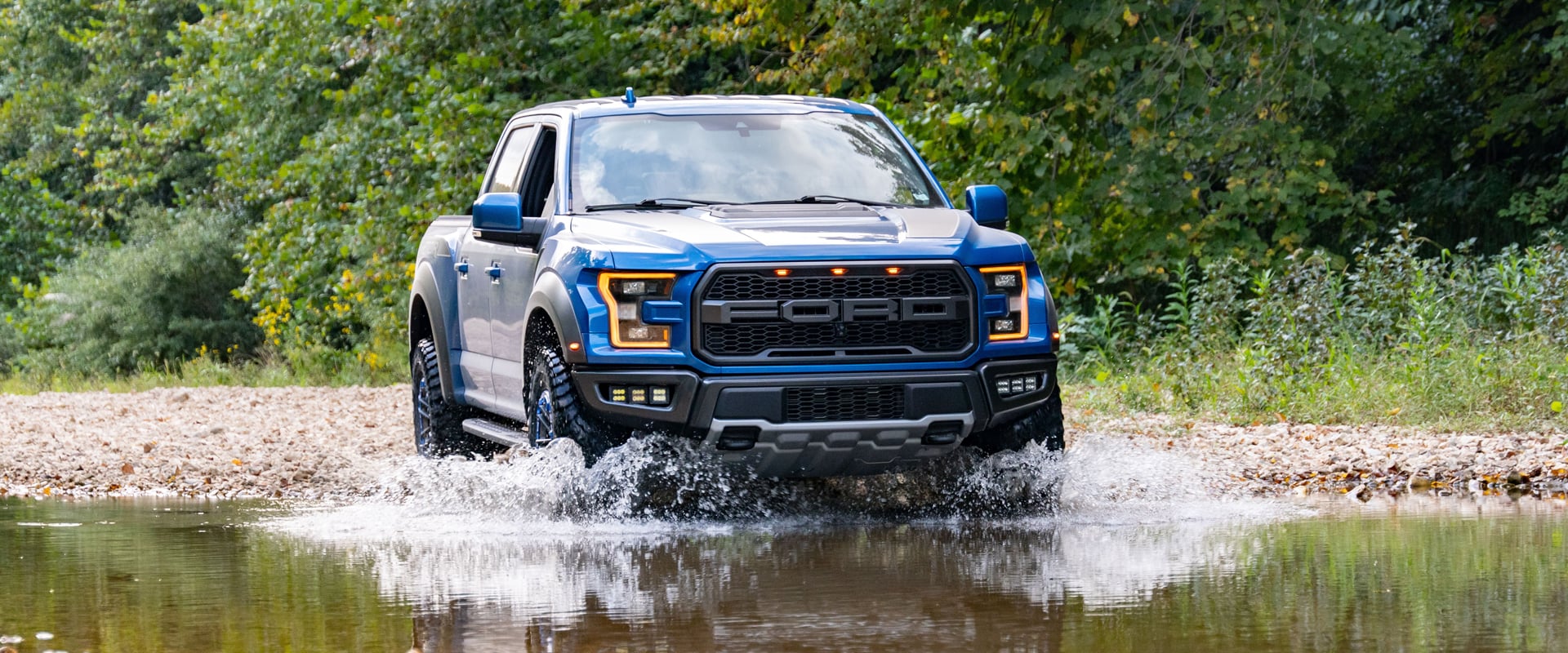
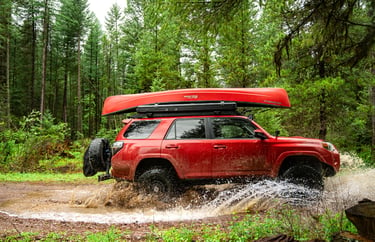
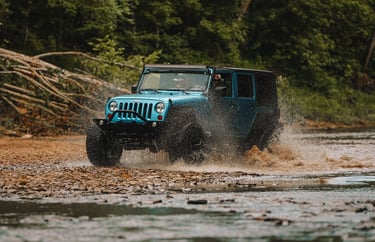
Before entering, determine the depth, current, bottom condition, entry point, and exit point from a safe location. Use depth markers, a long stick from stable ground, current trail reports, or information from park staff and experienced drivers.
Also consider the vehicle’s air intake, electrical components, traction, and ability to exit the crossing. Water depth can change after rain, even on a familiar route.
When you cannot confirm a safe path through, turn around.
Choose a Trail Suited to Your Experience
Beginners should start on easy trails with gradual grades, firm surfaces, and room to stop or turn around. These routes help you practice speed control, line selection, braking, and basic vehicle placement.
Intermediate drivers might feel comfortable with deeper ruts, loose climbs, shallow mud, and isolated rock obstacles. They still need to inspect unfamiliar sections and avoid treating the trail rating as a guarantee.
Advanced drivers have experience with spotting, recovery, throttle control, tire placement, and changing conditions. Their confidence comes from time behind the wheel, not from a list of modifications.
Upgrades support your skills. They do not replace them.
Check Conditions Before Leaving
Trail difficulty changes from one trip to the next.
Rain turns hard-packed soil into mud. Erosion exposes rocks and creates washouts. Fallen trees might block the safest route. Snow, ice, and standing water make climbs and descents less predictable.
Check official park updates, closures, weather forecasts, and recent trail reports before leaving. Review weather from the previous few days too. A clear forecast does not mean the ground has recovered from earlier rain.
Download maps or offline navigation before entering areas with limited cell service.
Know When to Turn Around
Good judgment matters more than completing every obstacle.
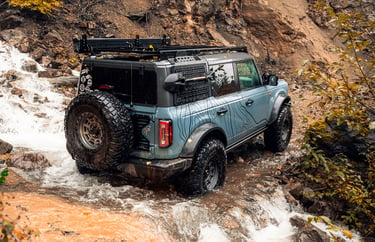
When something ahead makes you uncertain, stop in a safe location and inspect it. Review the available clearance, tire placement, traction, slope, and room on the other side. Consider whether you have a safe way to reverse or recover if the attempt fails.
Ask yourself:
- Do I see a safe line through?
- Does my vehicle have the clearance and traction?
- Do I have a recovery plan?
When one answer is no, turn around or choose another route.
What Recovery Gear Does Every Trail Rig Need?
Even a well-matched trail can produce a flat tire, stuck vehicle, or mechanical problem.
Start with secure, vehicle-appropriate recovery points. Factory transport loops are not always designed for recovery. Rated tow hooks, shackle mounts, or recovery points provide a safer connection for a strap, rope, or winch line.
A recovery strap lets a second vehicle pull a stuck rig from mud, sand, or a shallow rut. Pair it with rated soft shackles or D-ring shackles suited to both vehicles’ recovery points.
A kinetic recovery rope stretches under load and transfers energy gradually. It works well in many mud or sand recoveries, but the rope, connection points, and assisting vehicle must suit the load.
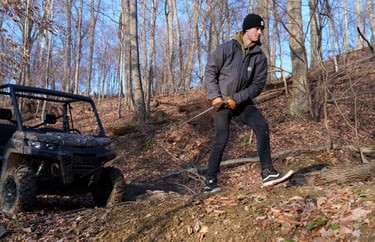
A winch provides a self-recovery option when another vehicle is unavailable. When choosing a winch for a truck, Jeep, ATV, or UTV, consider loaded vehicle weight, mounting system, line type, electrical capacity, and expected terrain.
Traction boards give tires a firmer surface in loose sand, snow, or mud. A tire repair kit handles small tread punctures, while an air compressor restores pressure after airing down. Basic tools, first-aid supplies, water, offline navigation, and a communication device support both the vehicle and its occupants.
Rough Country offers winches, recovery ropes, soft shackles, D-ring shackles, traction boards, air compressors, and other recovery accessories. Choose equipment based on your vehicle, terrain, and recovery method.
Build Around the Trails You Drive
Choose upgrades based on where and how you drive.
Forest-road vehicles might benefit most from all-terrain tires, reliable recovery points, an air compressor, and added lighting. Rock-focused builds often need suspension clearance, larger tires, skid plates, differential protection, and a high-clearance bumper.
Mud-focused rigs need secure recovery points, traction boards, a winch, and suitable tires. UTV owners should match suspension, wheels, and tires to their machine and terrain.
Rough Country LED light bars, light pods, and rock lights also support controlled driving in low-light conditions. Proper aiming matters, and extra lighting does not make high-speed nighttime trail driving safe.
Build around a clear purpose. Before choosing a Rough Country suspension, bumper, protection, lighting, or recovery product, confirm vehicle compatibility and match the product to the terrain you drive.
FAQs
What trail difficulty is best for a beginner?
Start with an easy trail featuring gradual grades, firm surfaces, minor obstacles, and several places to stop or turn around.
What recovery gear does every trail rig need?
Start with rated recovery points, a suitable recovery strap or rope, compatible shackles, a tire repair kit, an air compressor, basic tools, first-aid supplies, navigation, and communication.
Do off-road bumpers improve approach angle?
A high-clearance front bumper improves approach angle by reducing front overhang, helping the vehicle meet steeper obstacles without contact.
The right trail matches your vehicle, your experience, and the conditions you face that day. Choose well, prepare for problems, and work toward harder terrain one trip at a time.