Free shipping sitewide!* View Details
Free shipping sitewide!* View Details

Do Lifted Trucks Handle Differently in Snow and Ice?
November 13, 2026
0
lifted truck
lifted trucks in snow
winter tire traction
winter driving
Are Lifted Trucks Good in Snow?
Absolutely, especially when snow starts getting deep.
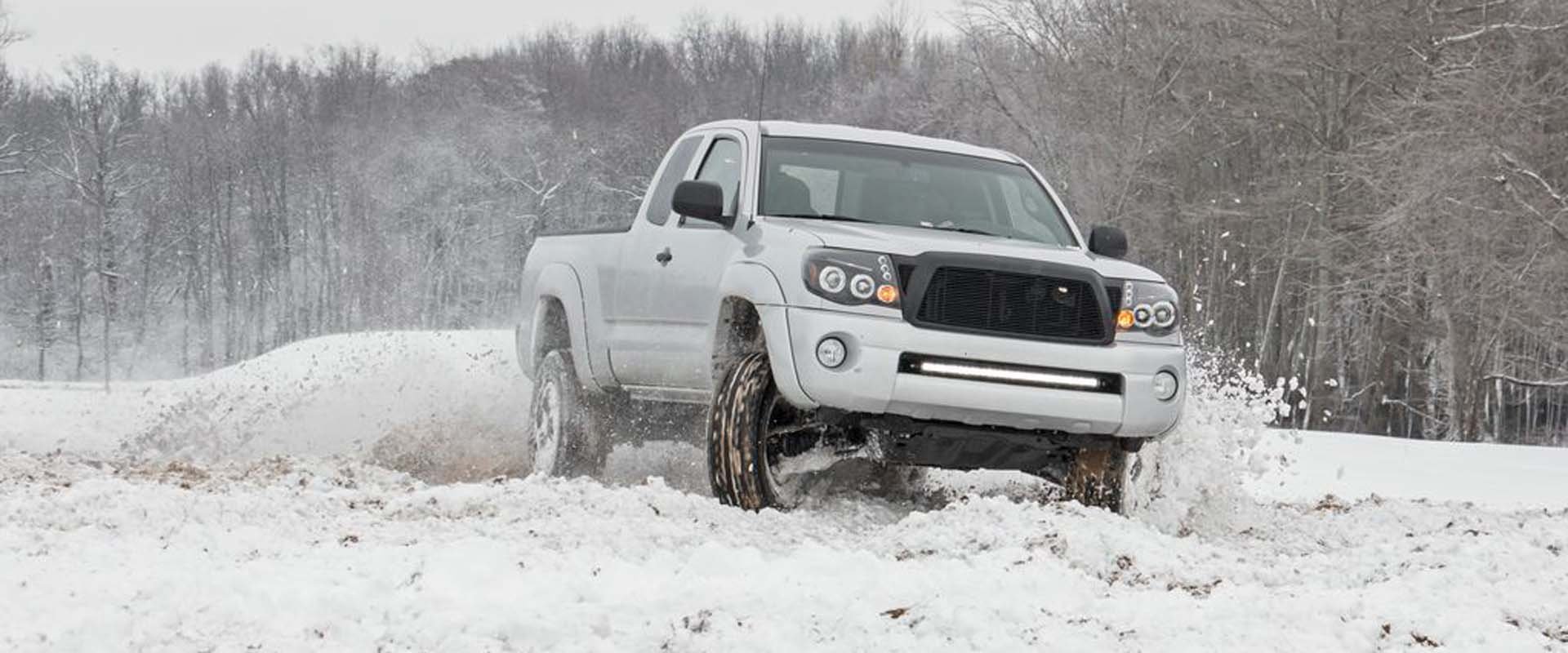
One of the biggest benefits of lifting your truck is the extra ground clearance. Raising the frame and undercarriage gives your truck more room to travel through accumulated snow without dragging or getting hung up.
If you regularly drive on rural roads, unplowed driveways, or snowy trails, those extra inches make a difference.
Larger-diameter tires often go hand in hand with a suspension lift. They add clearance beneath the axles and differential, giving your truck more room to move through deeper snow.
But ground clearance and traction aren't the same thing.
Ground clearance helps you get through deeper snow. Traction determines how well your tires grip the surface when you're accelerating, steering, and stopping.
For example, a lifted truck with oversized mud-terrain tires might handle a snowy trail well, while another truck equipped with dedicated winter tires might have better traction on icy pavement.
Neither setup is necessarily wrong. They're simply designed for different driving conditions.
The key is choosing a combination of lift height, tires, and suspension components suited to where you drive.
Get the Latest from Rough Country
Sign up for our newsletter to receive product updates, exclusive deals, and off-road tips straight to your inbox.
How Does a Lift Kit Affect Winter Handling?
A suspension lift changes your truck's height and how the suspension operates. Those changes affect handling throughout the year, but you'll want to pay closer attention when roads get slick.
Three things make the biggest difference: center of gravity, suspension geometry, and tire selection.
Center of Gravity
When you lift a truck, you generally raise its center of gravity.
That changes how weight shifts during turns, braking, and sudden steering movements. You might notice more body movement when cornering, particularly with taller lifts.
On snow and ice, smooth steering and gradual braking become even more important because your tires have less available grip.
A higher center of gravity also increases rollover risk during abrupt maneuvers, so giving yourself more room and reducing speed on slippery roads is especially important.
None of this means your lifted truck is poorly suited for winter. It simply means understanding how your setup responds and adjusting your driving accordingly.
Suspension Geometry
Lifting a truck changes the position and operating angles of certain suspension components.
Depending on your vehicle and lift height, components such as control arms, crossmembers, differential drop brackets, and steering parts help maintain appropriate suspension geometry.
That's why choosing a properly designed lift kit matters.
Rough Country offers vehicle-specific lift kits with components selected for the intended lift height and application. Following the installation instructions and completing any required alignment helps maintain proper suspension operation.
Shocks, Struts, and Suspension Components
The right suspension components make a difference in how your truck feels behind the wheel.
Shocks and struts help control suspension movement, including how the truck responds to bumps, uneven roads, and changes in direction.
Control arms and other suspension components help maintain appropriate geometry as the suspension moves.
When these parts are properly matched to your lift and kept in good condition, they help your truck maintain predictable handling.
That matters year-round, but especially when winter roads become uneven, snowy, or slick.
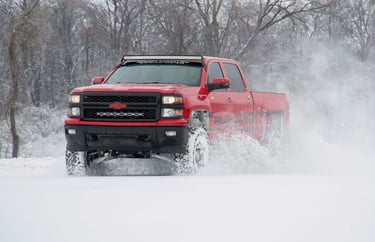
Does Lift Height Matter in Snow and Ice?
A 2-inch leveling kit and a 6-inch suspension lift won't affect your truck in exactly the same way.
Generally, taller lifts create more noticeable changes in center of gravity and handling. But the truck's suspension design, tire size, wheelbase, and overall setup all play a role.
Here's what to expect from a few common lift heights.
2-Inch Leveling Kit
A leveling kit typically raises the front of your truck to reduce its factory rake.
Since the height adjustment is relatively small, changes in everyday handling are often modest.
For drivers who want a more level stance and some additional front-end clearance without a taller suspension setup, a leveling kit is a practical option.
3.5-Inch Suspension Lift
A moderate suspension lift provides additional ride height and room for larger tires, depending on the vehicle and kit.
You might notice differences in steering response and body movement, especially after upgrading to larger wheels and tires.
Properly matched shocks, control arms, and other suspension components help maintain predictable handling.
A taller suspension lift provides substantially more frame and body clearance, which is useful when driving through deep snow, rutted trails, and uneven terrain.
With the added height comes a higher center of gravity. Larger tires and heavier wheels also influence how the truck responds during turns and braking.
For winter driving, take time to get familiar with your setup and adjust your speed and following distance to match road conditions.
Whether you choose a leveling kit or a taller lift, the goal is to match your suspension setup to how you use your truck.
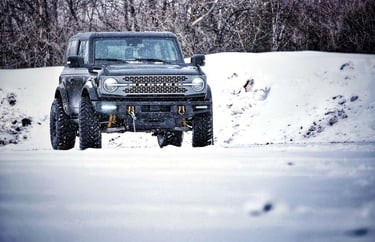
Are Bigger Tires Better in Snow?
Larger tires are one of the most popular upgrades for lifted trucks, and they offer a useful advantage in deep snow.
Increasing tire diameter raises the axles and differential, helping your truck clear snow and obstacles more easily.
But bigger doesn't automatically mean better traction.
Tire width, tread design, rubber compound, and inflation pressure all influence how well your truck handles winter roads.
Wide vs. Narrow Tires in Snow
Wider tires are popular on lifted trucks, but the ideal width depends on snow conditions.
Narrower tires often work better on slushy roads or snow covering a firmer surface. They push through less material and concentrate the vehicle's weight over a smaller area.
Wider tires sometimes have an advantage in soft, unpacked snow because they spread weight over a larger area, helping reduce sinking.
If your truck spends most of winter on paved roads, prioritize a tire designed for those conditions rather than choosing width alone.
Why Tread Design Matters
Two tires of the same size might perform completely differently on snowy pavement.
Winter tires use rubber compounds designed to stay flexible in cold temperatures. They also feature small cuts in the tread, called sipes, which create additional biting edges.
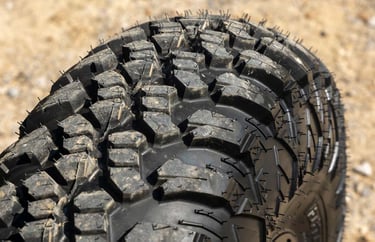
Aggressive off-road tires have deep grooves and larger tread blocks, making them useful in mud and loose terrain. Those features don't automatically provide the same grip on ice.
For regular snow driving, look for tires with the Three-Peak Mountain Snowflake (3PMSF) symbol. This marking identifies tires meeting a recognized minimum standard for snow traction.
Keep in mind, the rating doesn't guarantee strong braking or cornering performance on ice.
Why Proper Alignment and Suspension Setup Matter
A lift kit is only one part of a properly equipped suspension system.
Shocks, struts, control arms, steering components, and correct alignment all contribute to how your truck handles.
Depending on the lift height and vehicle, certain components help correct suspension angles or maintain proper steering geometry.
If your truck pulls to one side, wanders on the highway, or wears tires unevenly, those are signs worth checking before winter.
After installing a lift kit, follow the manufacturer's alignment requirements and recommended hardware inspections.
Keeping your suspension in good condition helps maintain predictable handling on dry pavement, snow, and ice.
For truck owners planning a suspension upgrade, Rough Country offers vehicle-specific lift kits, leveling kits, shocks, struts, and suspension components designed for a range of applications.
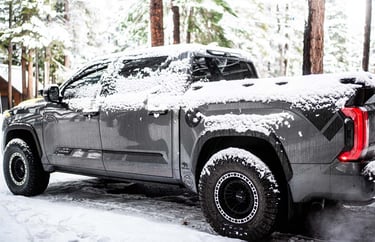
Don't Forget About Tire Pressure
Ever start your truck on a cold morning and notice the tire-pressure warning light?
Cold temperatures might be the reason.
Tire pressure generally drops approximately 1 PSI for every 10°F decrease in temperature. A 30-degree temperature drop might lower tire pressure by around 3 PSI, even without a leak.
Low tire pressure affects handling, tire wear, and overall performance.
Check your tire pressure when the tires are cold, preferably before driving.
For factory-size tires, follow your vehicle manufacturer's recommended cold inflation pressure.
If you've upgraded to larger tires or a different load range, the appropriate pressure might differ. Consult the tire manufacturer or a qualified tire professional for your setup.
And don't assume lower tire pressure is better for snowy pavement. Airing down serves a purpose in certain off-road situations, but everyday road driving requires proper inflation.
Related Reading: Does Cold Weather Affect Tire Pressure? Here's What Truck Owners Should Know
Does Extra Weight Change Winter Handling?
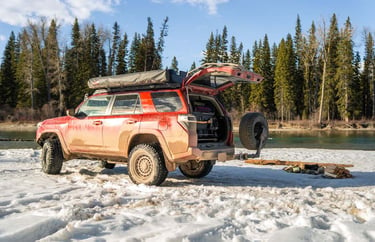
Many lifted trucks carry additional equipment, including aftermarket bumpers, winches, bed racks, and recovery gear.
Those upgrades add weight and sometimes change how weight is distributed.
Heavy equipment mounted high on your truck raises its center of gravity, while additional overall weight changes the demands placed on your tires and brakes.
Pickups deserve particular attention because an empty bed often leaves relatively little weight over the rear axle.
When packing winter supplies, keep heavier equipment low, secure everything properly, and stay within your truck's payload and axle weight ratings.
Where Lifted Trucks Have an Advantage in Winter
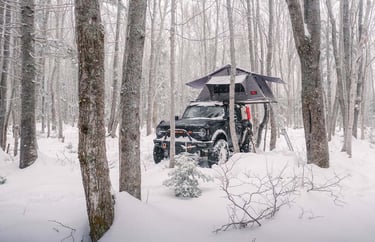
One of the biggest benefits of a suspension lift becomes clear when you leave maintained pavement behind.
Deep snow, unplowed roads, rutted trails, and uneven terrain all present challenges for trucks with limited ground clearance.
A properly equipped lifted truck has more room beneath the frame and body, reducing the likelihood of dragging through accumulated snow.
Larger-diameter tires also raise the axles and differential, adding clearance in areas where a suspension lift alone doesn't change axle height.
If you regularly drive through rural areas, snowy trails, or unplowed access roads, these advantages are worth considering.
For everyday winter highway driving, the priorities change. Tire traction, braking, steering response, and proper suspension setup matter more than additional height.
The best setup depends on how you use your truck throughout the year.
How to Get Your Lifted Truck Ready for Winter
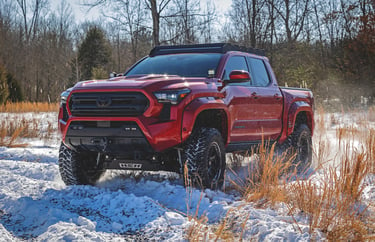
Before temperatures drop, spend some time checking your truck's suspension, tires, and steering components.
1. Inspect your tires. Check tread depth, uneven wear, sidewall damage, and winter traction ratings.
2. Check tire pressure. Make sure your tires are properly inflated for your vehicle and tire setup.
3. Inspect shocks and struts. Look for leaks, damaged mounts, or excessive suspension movement.
4. Check steering and suspension parts. Inspect control arms, ball joints, tie rods, track bars, and related components for wear or damage.
5. Verify alignment. Address steering pull, wandering, or uneven tire wear before winter weather arrives.
6. Inspect your brakes. Check pads, rotors, brake lines, and overall braking performance.
7. Check lift kit hardware. Follow the manufacturer's inspection and torque recommendations.
8. Verify tire clearance. Make sure larger tires have adequate room around suspension and steering components. Check tire-chain compatibility if winter travel requires chains.
9. Pack winter supplies. Keep appropriate recovery gear, a shovel, warm clothing, and emergency supplies in your truck.
Once you're on the road, the same winter-driving habits apply regardless of lift height. Reduce speed before turns, leave additional following distance, accelerate gradually, and avoid sudden braking or steering corrections.
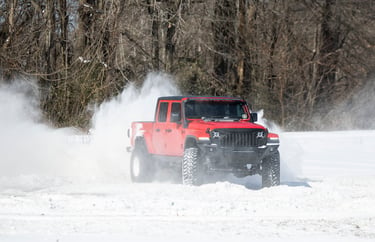
A lifted truck is well suited for many winter driving conditions, especially when deeper snow and rough terrain make extra ground clearance useful.
The right suspension setup helps maintain predictable handling, while properly selected tires provide the traction needed for slippery roads.
Whether you're considering a leveling kit or a taller suspension lift, choosing components suited to your truck and driving habits makes a difference.
Rough Country offers a wide selection of vehicle-specific lift kits, leveling kits, shocks, struts, control arms, and suspension upgrades to help you build a truck ready for your next adventure, whatever the season.
FAQs
Does a lift kit affect traction?
A suspension lift doesn't directly increase tire grip. Traction depends primarily on tire design, tread condition, inflation pressure, and road conditions. Proper suspension setup also helps maintain consistent tire contact with the road.
Do lifted trucks slide more on ice?
Lift height alone doesn't determine whether a truck slides. Tire choice, speed, braking, and steering inputs have a greater influence on available traction. A higher center of gravity does affect how a truck responds during sudden maneuvers.
Are mud-terrain tires good for winter driving?
Mud-terrain tires work well in certain types of deep, loose snow but often struggle on packed snow and ice. For regular winter highway driving, dedicated winter tires or snow-rated all-terrain tires generally provide better traction.
What's the best tire for a lifted truck in winter?
Dedicated winter tires generally provide the best traction for frequent snow and ice. For year-round driving, 3PMSF-rated all-terrain tires offer a practical alternative. Choose tires suited to your truck's load requirements, wheel size, and driving conditions.